What Is a Hair Graft - Follicular Units and Instrument Sizes
A hair graft is a follicular unit of 1 to 4 hairs taken with the tissue around it. This guide explains what a graft is, how its size is described, and why the graft sets the size of every instrument in the case, from the punch to the DHI needle and the sapphire blade.
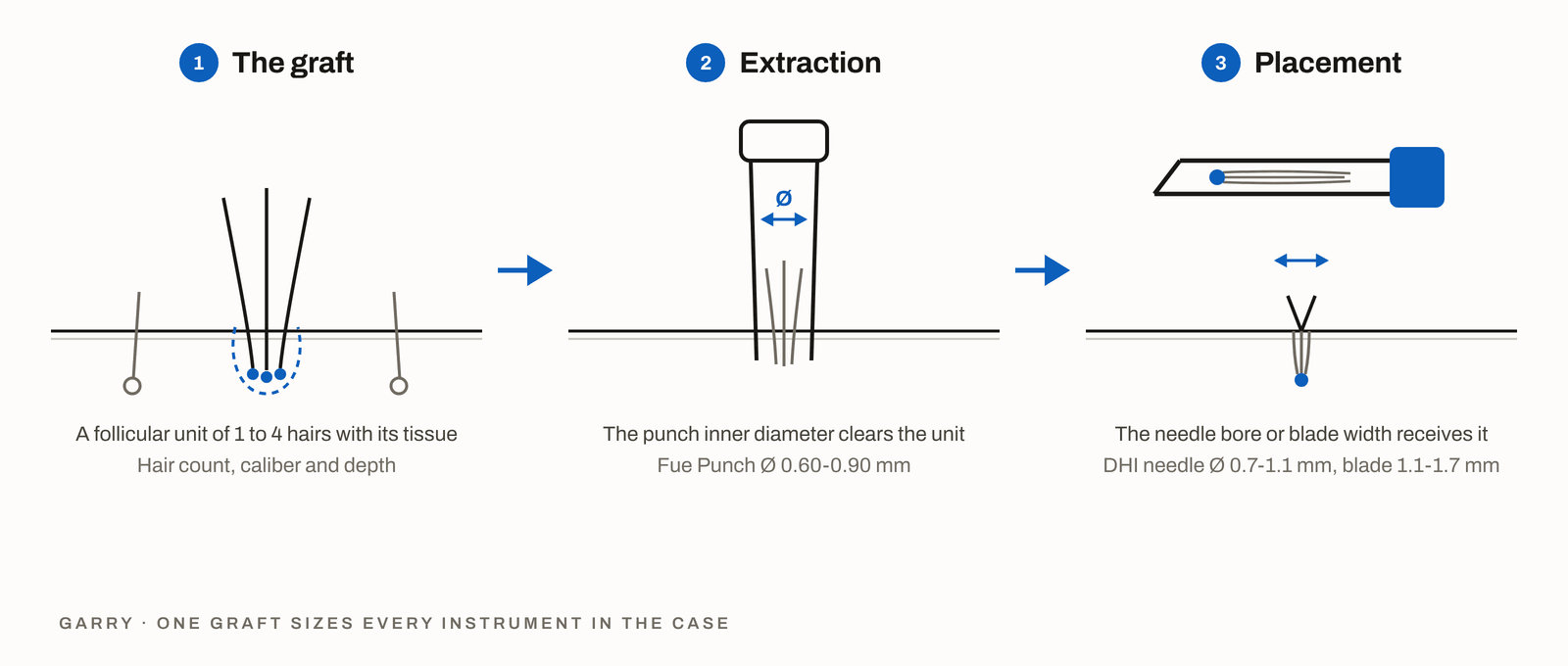
A hair graft is a follicular unit, the natural group of 1 to 4 hairs that grow together from the scalp, taken out with the small amount of tissue around it and moved to the recipient area. In FUE every graft is extracted one by one with a punch, and in every workflow it is placed into a channel opened by a blade or by an implanter needle. That is why the graft matters to instrument buyers as much as to surgeons. Its size decides the punch diameter at the donor area and the needle bore or blade width at the recipient area, so a clinic that understands its grafts can order the right sizes from the start. This guide explains what a graft is, how it is described and how its size carries through the instrument table, with the Garry Fue Punch range and the Garry DHI and sapphire lines as worked examples.
What a hair graft is
Hair does not grow from the scalp as single, evenly spaced strands. It grows in small natural groups called follicular units. A follicular unit usually holds 1 to 4 hairs, and around the follicles sits a thin envelope of tissue, the sebaceous gland, a little fat and connective tissue, that belongs to the unit. When that unit is removed whole and prepared for transplantation, it is called a graft.
The word is used in 2 ways, and it helps to keep them apart. In planning, a graft is a counting unit, the number a clinic quotes for a case. In the operating room, a graft is a physical object, a small cylinder of tissue that has to be cut free, held, kept moist and seated without being squeezed or bent. The instruments deal with the second meaning, and every size decision in this guide follows from the physical graft.
Graft count and hair count are not the same number. A case of a given number of grafts carries more hairs than grafts, because many units hold 2 or 3 hairs. The glossary defines both terms and the related vocabulary, from follicular unit to donor area and recipient site.
How a graft is described
3 properties describe a graft from the instrument side.
- Hair count. Single-hair units, 2-hair units and fuller units of 3 or 4 hairs differ in width, and a donor area produces a mix of them.
- Caliber. The thickness of the individual hairs, which varies from patient to patient and between donor regions. Fine hair and coarse hair produce grafts of different width even at the same hair count.
- Depth. How deep the follicles sit under the skin, which sets how far the punch has to travel to free the unit.
Together these give what surgeons call the graft caliber, the practical width of the unit that the instruments have to accept, and its length. Hair count and caliber decide the width, depth decides the length. A clinic does not measure each graft, but the team plans by the mix it expects, for example a hairline of fine single-hair units and a mid-scalp of mixed 2 and 3-hair units.
Why the graft sizes the punch
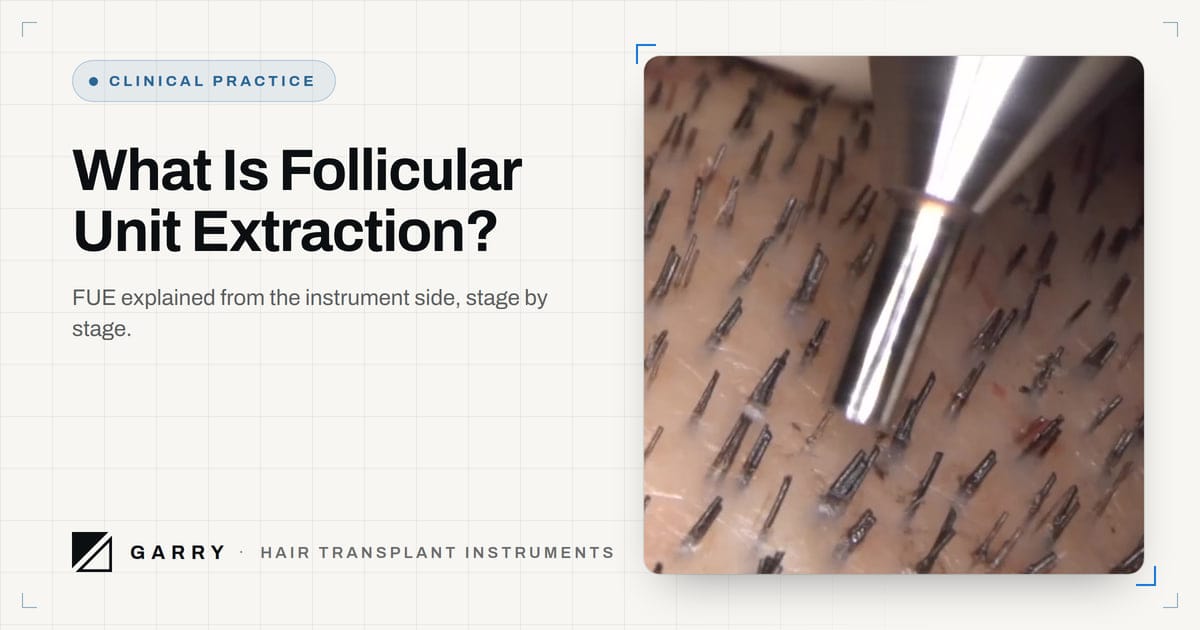
At the donor area the punch has one task, to score around the follicular unit and free it with its tissue in place. 2 of its dimensions follow the graft directly.
The inner diameter has to clear the unit. Garry punches are specified by their inner diameter, the opening the graft passes through, because that is the dimension the graft meets. A diameter that is tight for the unit risks cutting into the follicles at the edge of the group, and a diameter that is generous takes more tissue than the unit needs. Follicle transection during extraction is influenced mainly by how well the punch diameter matches the graft caliber, how well the working length matches the follicle depth, how the punch is aligned with the exit angle of the hair and the condition of the edge.
The working length has to reach the depth of the follicles. It is the part of the punch that enters the skin, so it is matched to follicle depth, which varies by patient and by donor region.
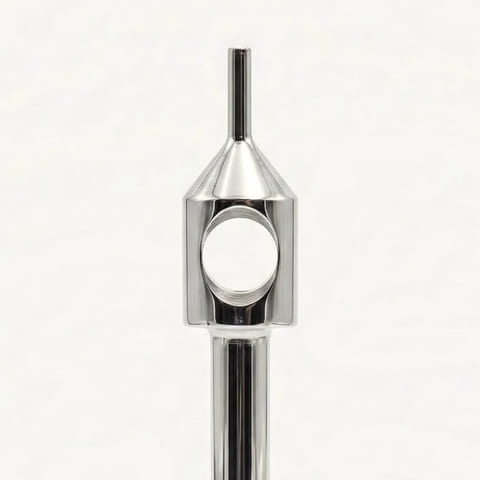
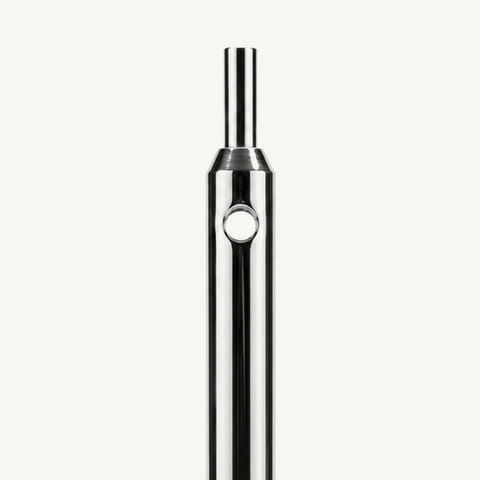
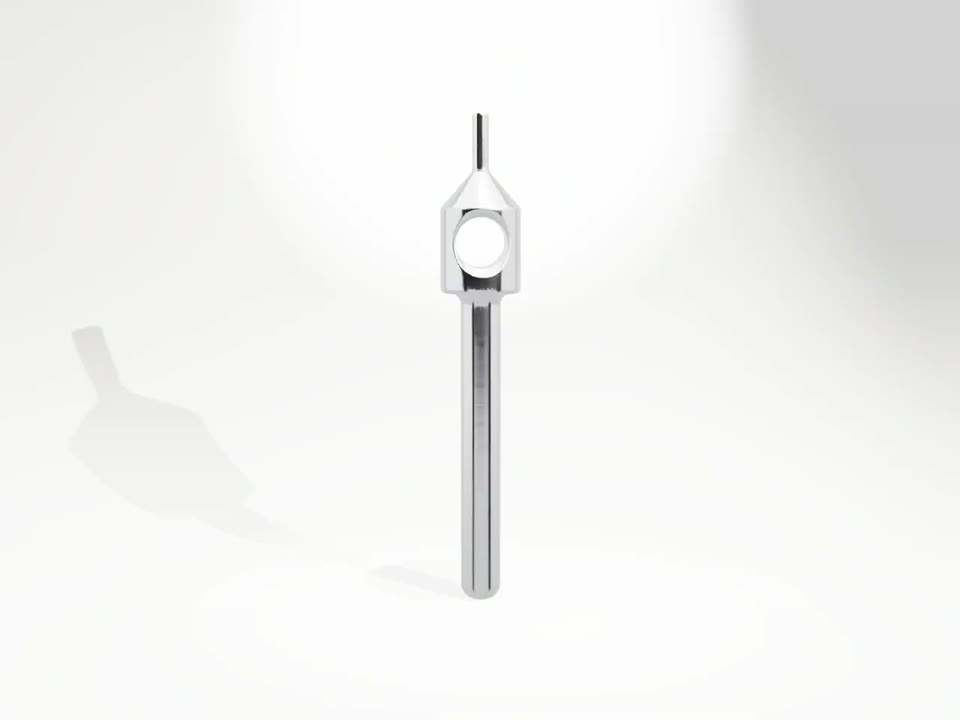
The Garry Fue Punch is made in 7 inner diameters, Ø 0.60 to 0.90 mm, each in 5 working lengths, 2.5, 3.0, 3.5, 4.0 and 5.0 mm. Every combination has its own order code, from PCH-060-25 to PCH-090-50, and the cutting tip is serrated. The selection logic for both dimensions is set out in our punch size guide.
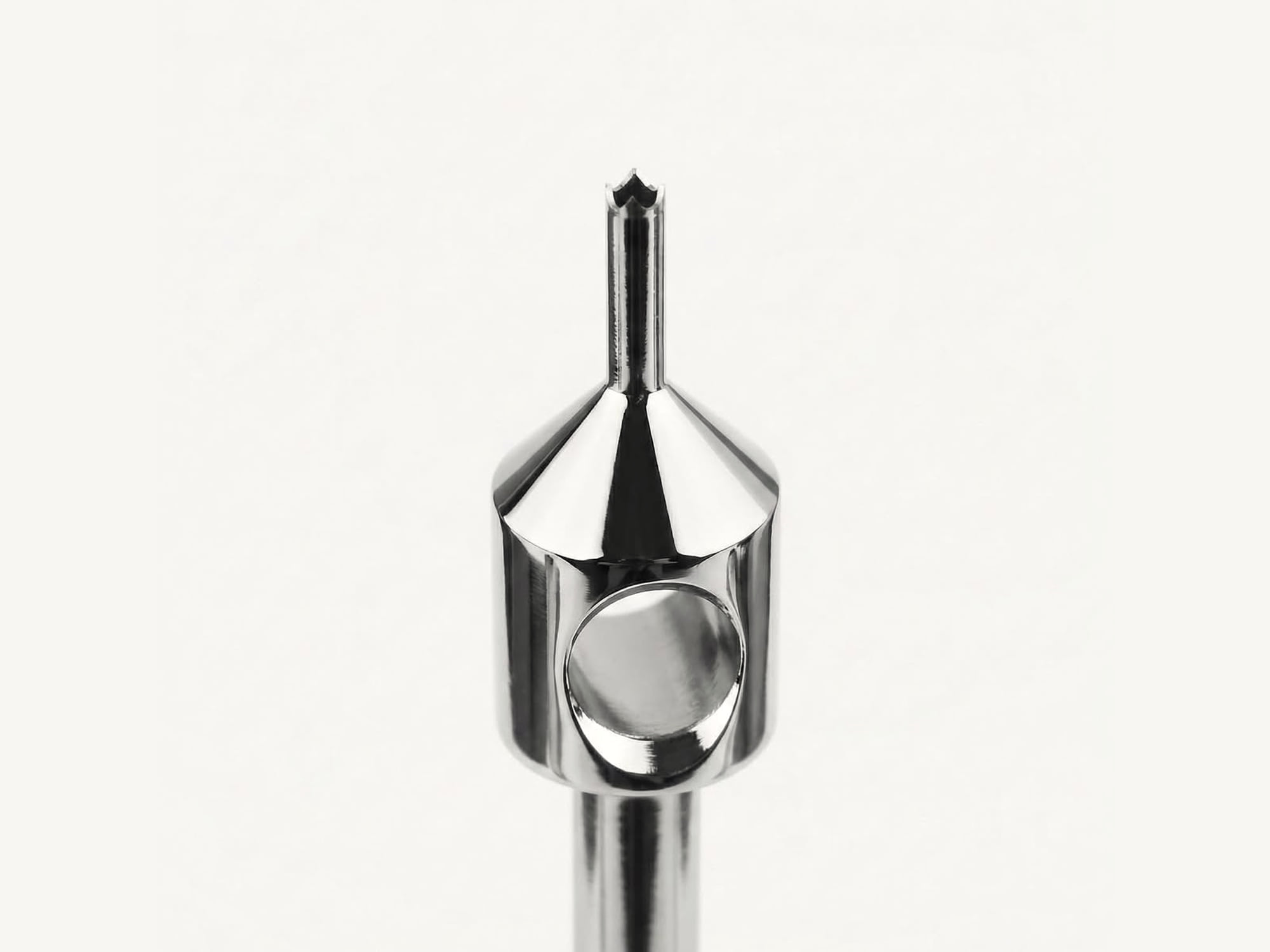
For unshaven cases, where the graft leaves the donor area with its hair shaft still long, the Garry Long Hair Fue Punch is designed for long hair, in Ø 0.80, 0.85 and 0.90 mm with a 4.0 mm working length, LPCH-080-40 to LPCH-090-40.
Why the graft sizes the needle and the blade
The graft that came out of the donor area has to go back in at the recipient area, and the instrument that receives it is sized to the same graft.
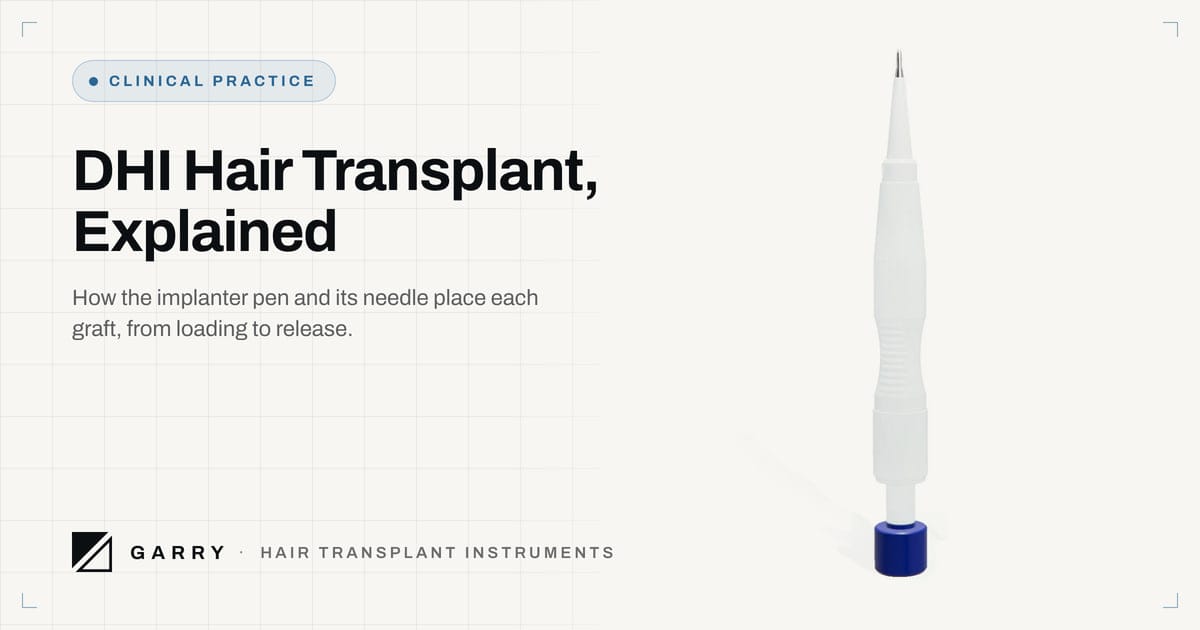
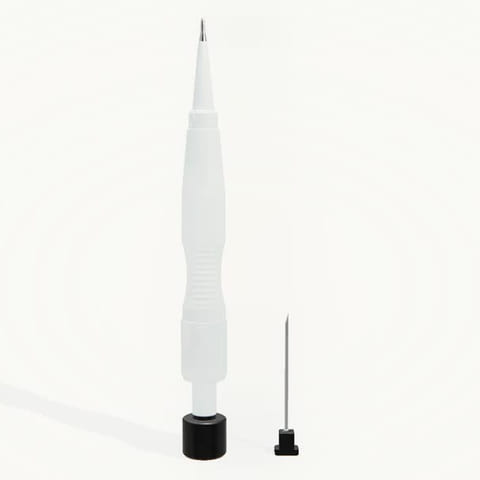
In DHI, the graft is loaded into the hollow needle of an implanter pen and placed through it. The bore of the needle is the channel the graft travels through, so it is chosen for the graft caliber. A bore that is too small squeezes the graft at loading, and a bore that is too large lets it sit loose. The Garry DHI Implanter Needle is made in 5 bores, Ø 0.7, 0.8, 0.9, 1.0 and 1.1 mm, DHI-TIP-070 to DHI-TIP-110. Each size has its own colour, yellow, blue, red, white and black, carried by the needle hub and by the cap of the pen of the same size. Our guide to implanter needle sizes goes through the choice size by size.
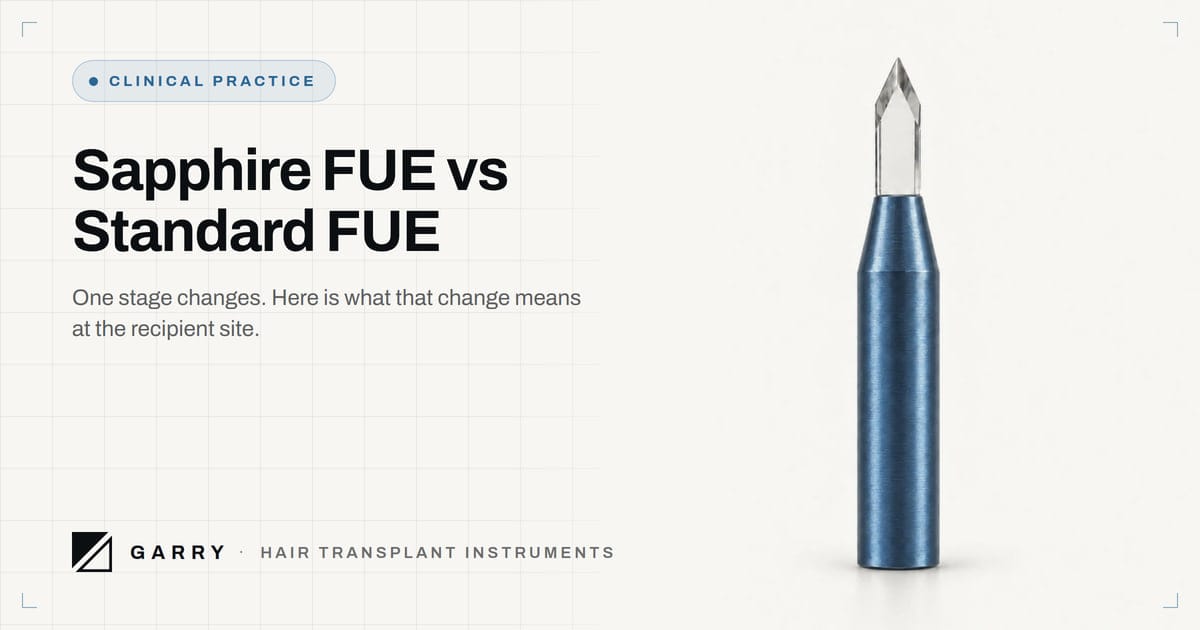
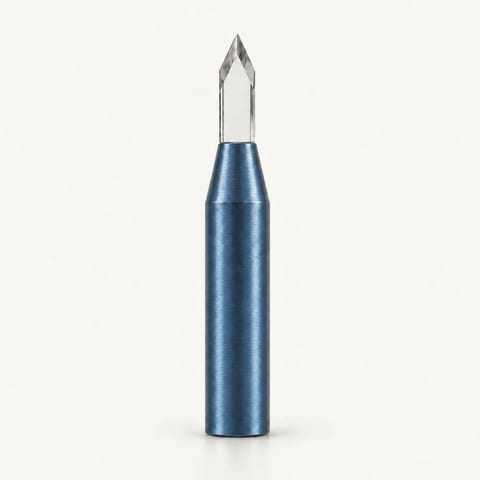
In Sapphire FUE and standard FUE, the recipient channels are opened before placement, and the blade width sets the width of the channel the graft is placed into. The Garry Sapphire Blade is made in 7 widths, 1.1 to 1.7 mm, each in 4 blade lengths, 4.0, 4.5, 5.0 and 5.5 mm, from SF-110-40 to SF-170-55.
The numbers on the 2 sides are not the same scale and are not meant to be. A punch is specified by the inner diameter of a round opening, a needle by its bore and a blade by the width of its cutting edge. What links them is the graft, which is why the 3 sizes are planned together rather than one after the other.
The graft mix and the sizes that match it
The table lists the published guidance for each Garry size by the grafts it is described for. It is a starting point for planning, and the final choice for any zone and any patient is the surgeon's.
| Graft type | Fue Punch inner diameter | DHI needle bore | Sapphire Blade width |
|---|---|---|---|
| Finest single-hair units | Ø 0.60 to 0.65 mm | Ø 0.7 mm, yellow | 1.1 mm |
| Fine single-hair grafts | Ø 0.70 mm | Ø 0.8 mm, blue | 1.1 to 1.2 mm |
| Mixed follicular units | Ø 0.75 to 0.80 mm | Ø 0.9 mm, red | 1.3 to 1.4 mm |
| Fuller multi-hair units | Ø 0.85 mm | Ø 1.0 mm, white | 1.5 mm |
| Multi-hair units and coarse calibers | Ø 0.90 mm | Ø 1.1 mm, black | 1.6 to 1.7 mm |
2 practical points follow from the table. A real case is rarely one graft type, so a plan usually names more than one size of each instrument, adjacent sizes that cover the spread of the mix. And the plan runs from the donor area forward. The punch diameters chosen for the donor profile set the calibers that come off the donor area, and the needle bores or blade widths are chosen to seat those calibers, not the other way round.
Handling the graft between the instruments
Between extraction and placement the graft is outside the body, and the handling is part of the plan. Grafts are kept moist, held by the tissue around the follicles rather than by the bulb, and kept away from pressure. In DHI, loading is the step where handling counts most, which is why teams train it first. In forceps placement, it is the grip of the forceps. Clinic protocols decide these steps, and no instrument replaces them.
This is also where inspection matters on the instrument side. Every Garry punch, needle and blade is inspected individually before it ships, and the cutting edge of every punch is examined under magnification, so the instrument that meets the graft matches its published specification.
Questions buyers ask about grafts and sizes
How many hairs does one graft carry? A follicular unit usually holds 1 to 4 hairs, so a graft carries 1 to 4 hairs, and a case carries more hairs than grafts.
Is graft size the same as punch size? No. The punch inner diameter is chosen to clear the graft, so it follows the graft caliber, but the 2 are different measurements. The same holds for the needle bore and the blade width.
Which Garry punch diameter is the standard size? Ø 0.8 mm is the standard size of the line and suits mixed follicular units. The finer and larger diameters cover the 2 ends of the graft mix.
Do we need a different needle for every graft type? Not one per graft, but a plan with several graft types usually uses more than one bore. The pen and needle of each size share the colour, so the loading station can hand over the right one at a glance.
Can I get a size suggestion for my case mix? Yes. Send your donor profile and graft mix through the contact page, and the reply lists the order codes in writing within 24 hours on business days. The Fue Punch questions and answers cover the punch side in more depth.
Ordering instruments by graft
Planning by graft is the shortest route to the right order. Describe the graft mix you expect, the donor profile and the placement method, and we answer with the punch, needle or blade codes that fit it, from our facility in Türkiye. Each size has its own product page, for example the Garry Fue Punch 0.8 mm - 4.0 mm, and distributors who want to carry the line can apply for a dealer account.