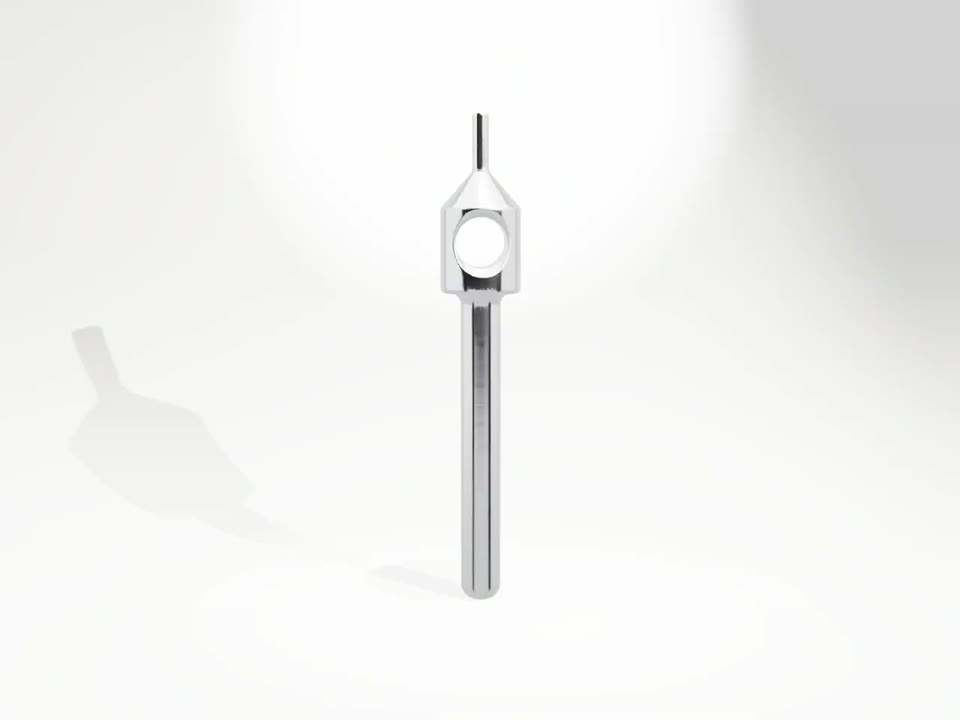
Implanter Needle Sizes - Matching the Needle to the Graft
Implanter needles are sized to graft caliber, not habit. How the bore-to-graft match works, why it must be planned with your punch diameters, and what to check before stocking.
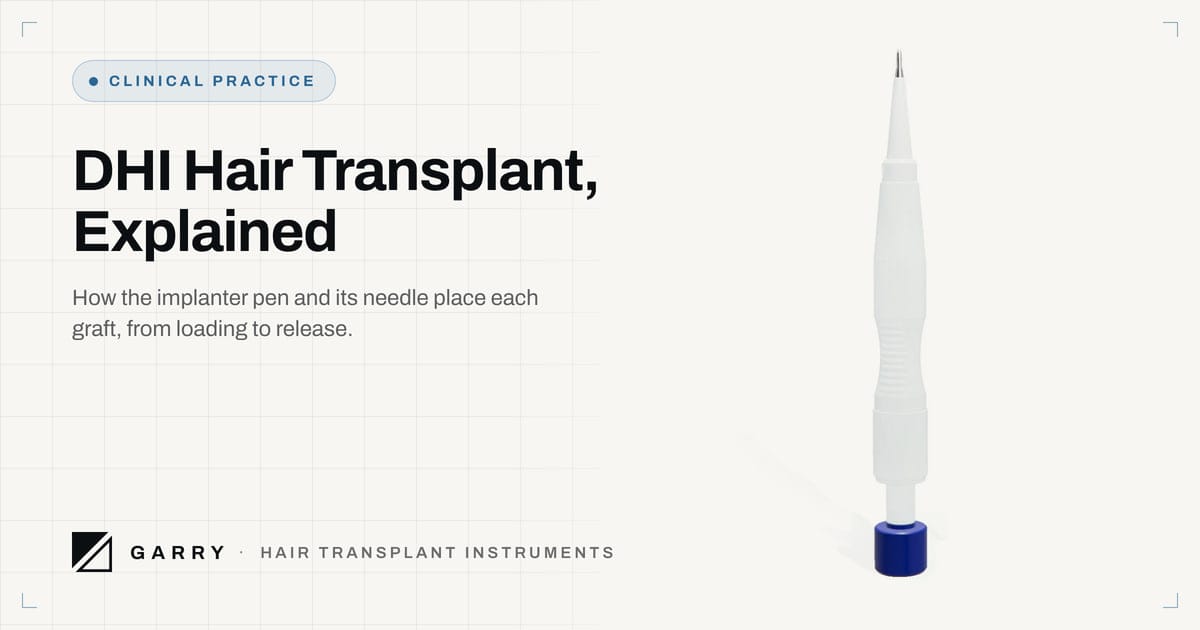
An implanter pen is only ever as good as the needle in its seat - and the needle is only as good as its match to the graft passing through it. Needle sizing looks like a detail until placement day, when a mismatch shows up as jammed grafts, over-handled tissue or oversized channels. This guide explains the sizing logic from the manufacturer's side, including what the numbers mean, how to plan them against your punches, and what to check before you stock.
What the size number means
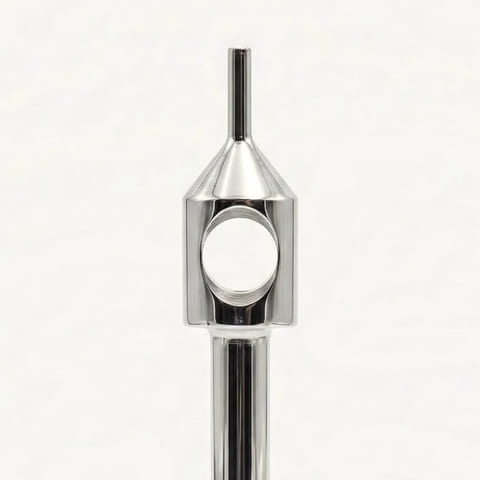
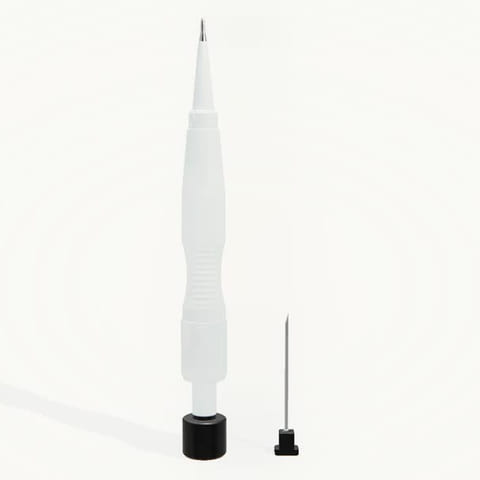
An implanter needle's size describes its bore - the internal channel the graft is loaded into and travels through during placement. Across the market, implanter needles are commonly offered in the region of 0.6 mm to 1.2 mm, stepped to match graft calibers from fine single-hair units up to coarse multi-hair units. Garry implanter needles are published in 5 bores, Ø 0.7, 0.8, 0.9, 1.0 and 1.1 mm, each with its own order code (DHI-TIP-070 to DHI-TIP-110). Each bore also has one colour, shared by the needle hub and the pen cap of that size, so the colour identifies the bore (Ø 0.7 mm yellow, 0.8 mm blue, 0.9 mm red, 1.0 mm white, 1.1 mm black).
The bore has one job, which is to hold the graft securely enough to place it and loosely enough not to compress or shear it. Both kinds of mismatch cause problems.
- Bore too small → grafts jam at loading, get squeezed during transit, and technicians compensate with extra handling - precisely what the implanter exists to avoid.
- Bore too large → the graft sits loose, placement precision drops, and the needle opens a bigger channel than the graft needs.
Sizing starts at the punch, not the pen
The planning error we see most often is that punches are chosen for the donor, needles are ordered out of habit, and the two meet for the first time mid-case. The graft's caliber is set at extraction - by the punch diameter and the donor's hair. Placement has to accept what harvesting produces, so the sizing sequence runs as follows.
- Choose punch diameters for the donor and graft mix - as covered in our punch size guide.
- Map the expected graft calibers that mix will produce, whether mostly single-hair units or a spread through three- and four-hair units.
- Stock needle sizes that seat that spread comfortably - typically more than one size, for the same reason serious practices stock more than one punch diameter.
Treating the punch line and the needle list as one system is the difference between a designed protocol and an improvised one. (The same logic pairs the punch with the implanter pen itself.)
A session runs on more than one needle
Needles are consumables. The practical stocking questions below matter more than any single "best size".
- Mix, not one size. A real case places a range of calibers; the tray should carry the sizes the plan calls for, loaded and ready.
- Change cadence. Needle edges are very fine, so teams change needles during long sessions per their protocol and the product's instructions for use.
- Supply continuity. A pen standardised today is a needle commitment for years - confirm sizes, availability and reorder consistency before you standardise, exactly as you would for any instrument supplier.
What to check before stocking (the short list)
| Check | Why it matters |
|---|---|
| Size range vs your graft mix | The bore must match what your punches actually harvest |
| Fit with your pens | Needles seat in a specific pen system - confirm compatibility |
| Packaging and sterility format | Confirm the supplied format matches your reprocessing workflow |
| Order codes per size | A consumable you reorder monthly must be identified exactly, not approximately |
| Reorder consistency | The size that works must be the same size next quarter |
The GARRY needle line
GARRY manufactures implanter needles alongside its implanter pens in Türkiye. Each needle is individually inspected before it ships, each size has its own order code, and supply comes direct from the manufacturer. Needles are supplied 50 per box in protective per-needle packaging. Availability is confirmed on quotation, and evaluation quantities let your team verify loading feel and pen fit in real sessions before committing.
Frequently asked questions
What implanter needle sizes exist? The market commonly spans roughly 0.6-1.2 mm bores, stepped by graft caliber. Garry publishes 5 bores, Ø 0.7 to 1.1 mm, from DHI-TIP-070 to DHI-TIP-110, each with its own colour.
Can one needle size cover a whole case? Only if the graft mix is unusually uniform. Most real cases place a range of calibers and run more than one size.
Do needles fit any implanter pen? No - needles seat in a specific pen system. Confirm compatibility before ordering, especially when mixing suppliers.
How often should needles be changed in a session? Per your protocol and the product's instructions for use - as a general rule, more often than a hard-pressed team would like, because a worn edge shows up in placement quality.
If you are planning a DHI setup or stocking a dealer line, request a quote with your pens, punch diameters and expected graft mix - we reply within 24 hours on business days.