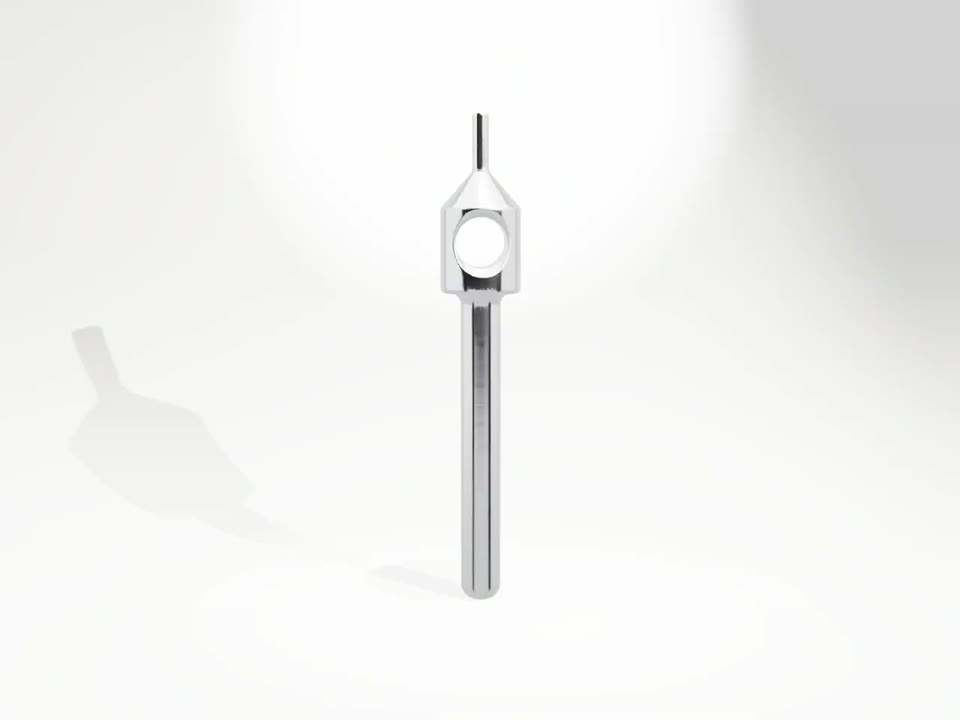
FUE Punch Sizes Explained - Diameter & Length Selection Guide
What FUE punch diameter and working length actually control, how to read a size, and why serious clinics stock a ladder of diameters instead of just one.
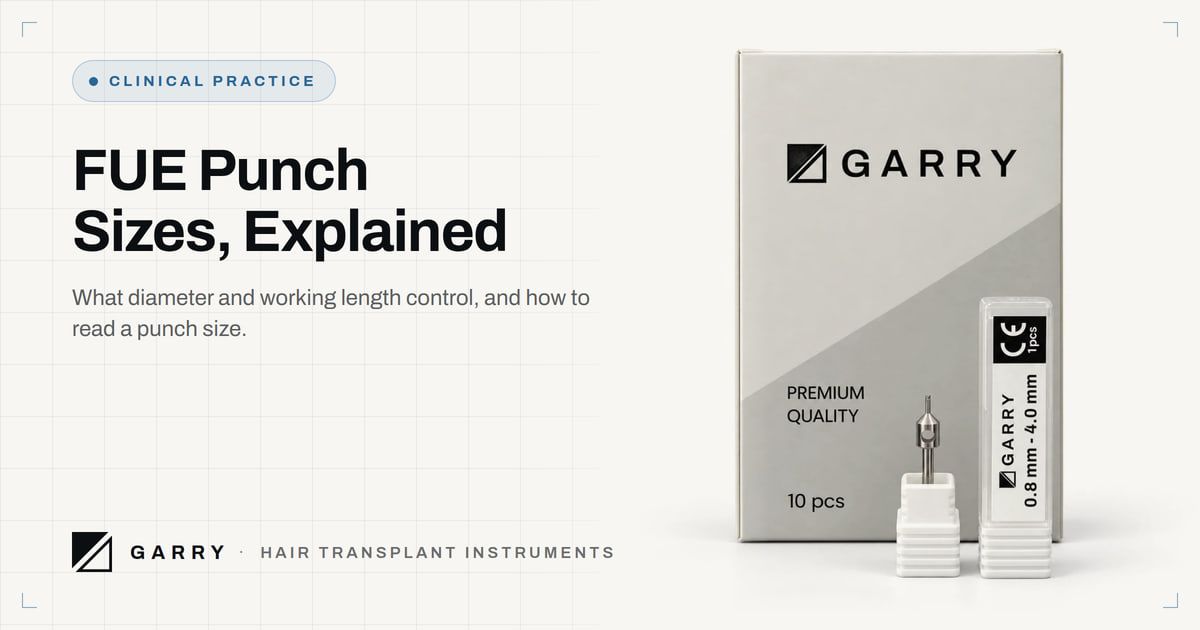
"What size punch should we use?" is the question every new FUE surgeon asks, and no single number is correct for every case. Punch sizing is a set of trade-offs - graft fit against scar footprint, harvest speed against transection risk, donor caliber against recipient plan. This guide explains what diameter and working length each control, how to read a punch specification, and why it makes more sense to build a set than to search for one "best" size.
What diameter controls
The diameter is the headline number, usually given in tenths of a millimetre, and GARRY states it as the inner diameter of the punch. It governs three things at once.
- Graft fit. The punch has to encircle the follicular unit without shaving it. Coarse, multi-hair grafts need more room than fine single-hair units. Too small and you risk transection; too large and you take excess surrounding tissue.
- Scar footprint. Every extraction leaves a small circular donor wound. A smaller diameter leaves a smaller footprint, which is why dense-donor planning tends to favour the smallest diameter that still clears the graft cleanly.
- Harvest feel and speed. Diameter interacts with how the punch scores and releases tissue, which affects the rhythm of a long harvesting session.
Diameter is where most of the clinical debate lives, and it is genuinely surgeon- and protocol-dependent.
What working length controls
Working length is how deep the cutting portion reaches - offered at 2.5, 3.0, 3.5, 4.0 and 5.0 mm in the GARRY line. It is matched to follicle depth, which varies by patient and by donor region. Too short and the punch may not fully score the unit before extraction; too long adds no benefit and can increase the chance of catching deeper structures. Length is debated less than diameter but matters just as much. A punch that fits the graft caliber but is the wrong depth for the patient's follicles is still the wrong tool.
How to read a size like "Ø 0.80 mm × 3.5 mm"
Every GARRY punch is specified the same way.
- Ø 0.80 mm is the inner diameter - the bore that surrounds the graft.
- × 3.5 mm is the working length - how deep the cutting edge reaches.
So "Ø 0.80 mm × 3.5 mm" describes a punch with a 0.80 mm inner diameter and a 3.5 mm working length. Our confirmed standard range spans Ø 0.60-0.90 mm in 7 inner diameters and 2.5 / 3.0 / 3.5 / 4.0 / 5.0 mm working lengths - 35 combinations, each with its own order code (PCH-060-25 to PCH-090-50).
Diameter to typical use
The table below is a starting point, not a prescription. Your donor caliber and protocol will shift these boundaries.
| Diameter | Typical use | Notes |
|---|---|---|
| Ø 0.60 mm | Finest, single-hair grafts | Smallest footprint; least tolerance for coarse units |
| Ø 0.65 mm | Very fine, single-hair grafts | Very small footprint; little tolerance for coarse units |
| Ø 0.70 mm | Fine, predominantly single-hair grafts | Small footprint; limited tolerance for coarse units |
| Ø 0.75 mm | Fine to mixed grafts | Common "workhorse" for fine donor hair |
| Ø 0.80 mm | Mixed single and multi-hair grafts | A general-purpose size in the middle of the range |
| Ø 0.85 mm | Mixed to coarser, multi-hair grafts | More clearance for thicker units |
| Ø 0.90 mm | Coarse, multi-hair grafts | Larger footprint; used where caliber demands it |
Read every row as design guidance, not a promise. A coarse-haired patient can push the sensible choice a full step larger than a fine-haired one.
Selecting by donor type and graft mix
The two variables that should drive your choice are donor caliber (how thick the individual hairs are) and graft mix (the ratio of single-hair to multi-hair units you plan to harvest). Fine donor hair with mostly single-hair grafts leans small; coarse donor hair with many chunky three- and four-hair units leans larger. Because most real donor areas contain a range of caliber, most surgeons do not run a single diameter for a whole case.
Why clinics stock multiple diameters
In practice, a serious FUE clinic stocks a small ladder of diameters rather than a single size. Having Ø 0.75, 0.80 and 0.85 mm on the tray lets the surgeon match the punch to the graft in front of them instead of forcing every unit through a compromise. Stocking a ladder also means a fresh, sharp punch is available mid-session - sharpness matters as much as nominal size.
Size first, cutting geometry second
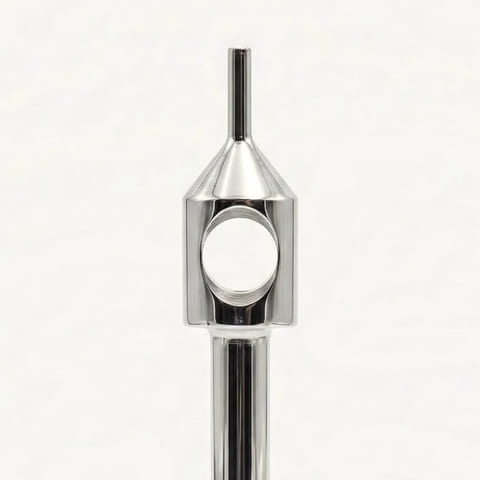
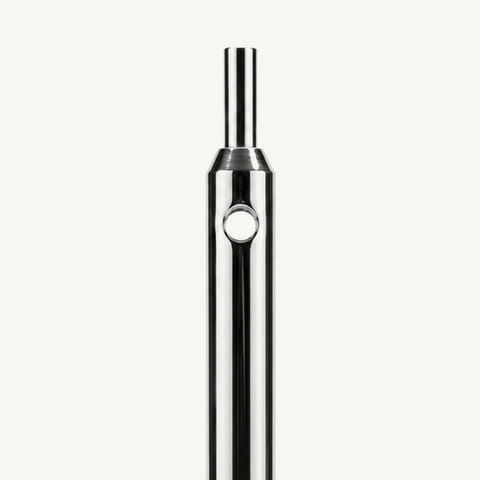
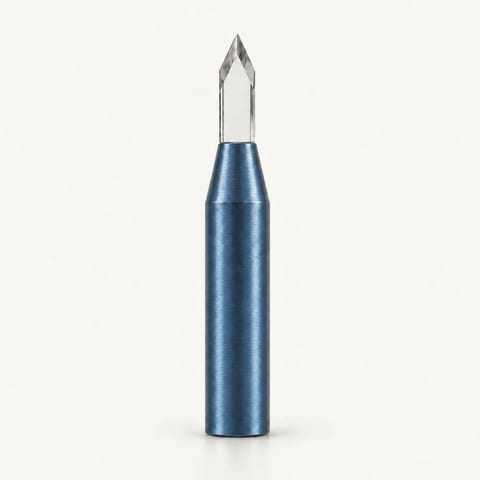
Diameter and length describe the hole; the cutting geometry describes how the edge gets there. Three design schools exist across the industry - sharp contact-scoring edges, internally serrated separating edges, and flared hybrid bevels - and geometry is a second axis of choice layered on top of size. Two surgeons may both want Ø 0.80 mm × 3.5 mm and still prefer different cutting characters. In the Garry line you order by size code, one code per diameter and working length, and every size of the Garry Fue Punch has a serrated cutting tip. See the full FUE punch range for every size.
Motorized versus manual - a brief note
Punch size interacts with, but is separate from, whether you run a motorized or manual handpiece. Motorized systems change the cutting dynamics and rotation, which can shift a surgeon's preferred diameter slightly, but the diameter-and-length logic above still applies. Choose the size for the graft and donor first, then fit it to your handpiece system.
Where punch choice meets placement
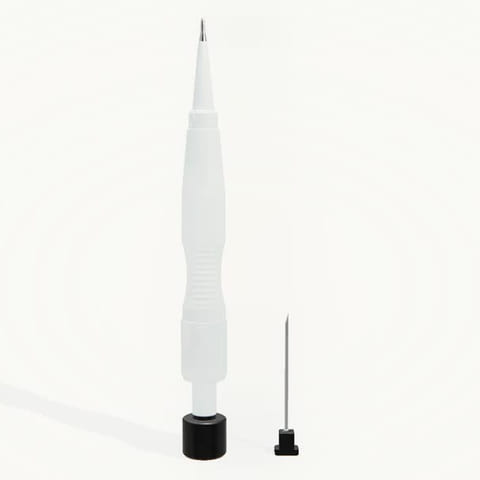
Harvesting is only half the workflow. If you run a DHI protocol, the implanter needle bore has to accept the grafts your punch produces, so punch diameter and DHI implanter needle sizing should be planned together rather than in isolation. A mismatch between what you harvest and what your implanter comfortably seats creates friction at the placement stage. For definitions of terms used here, see our glossary.
FAQ
What is the "best" FUE punch size? There isn't one. The right size is the smallest diameter that cleanly clears the graft in front of you, at a working length matched to that patient's follicle depth.
Why stock more than one diameter? Real donor areas contain a range of graft calibers. A ladder of diameters lets the surgeon match the tool to each unit instead of compromising.
Does a smaller punch necessarily mean less scarring? A smaller diameter leaves a smaller footprint, but only if it still clears the graft without transection. Going too small to chase a smaller wound is counterproductive.
How do I pick a cutting geometry at the same size? That is a cutting-character preference best settled by trials in comparable sessions - the Garry Fue Punch has a serrated cutting tip, so with Garry the choice is the diameter and the working length.
For a one-page reference to keep by the tray, our free Fue Punch Selection Chart sets out diameter, typical graft use and order codes, ready to print. Request a quote with the sizes you are considering - we reply within 24 hours on business days, and can include evaluation quantities across the Ø 0.60-0.90 mm range so your surgeons choose on real tissue.