
10 Questions Clinics Should Ask Any Instrument Supplier
A due-diligence script for procurement - 10 questions on quality systems, CE/MDR, sizing, inspection, materials and warranty to ask any supplier.
Buying surgical instruments calls for careful supplier due diligence. In hair restoration the market is crowded, and the gap between a well-run manufacturer and a rebadging reseller is not easy to see on a glossy product page. The questions below are the ones a clinic should put to any instrument supplier - including us. Good suppliers welcome them; evasive ones change the subject. Use this as a script for your next procurement call.
The 10 questions
1. What quality management system do you operate, and what is the certificate version and date?
The relevant standard is ISO 13485 (2016 edition) for medical device quality management. Buyers should check the certificate's version and date, not only that one exists - older editions and lapsed certificates still circulate in this market. A good answer names the current standard, states who issued the certificate and when it was last renewed, and does not get defensive about you verifying it. A vague "we are ISO certified" with no version is a flag.
2. Are these devices CE marked under EU MDR, and can you provide the Declaration of Conformity?
Since 2021, EU MDR 2017/745 replaced the old Medical Device Directive (MDD 93/42/EEC). A supplier selling into or from the EU should be able to explain its conformity route and provide a Declaration of Conformity (DoC) on request. Listen for fluency. A manufacturer that knows its regulatory basis can explain it plainly. "We'll send it over" followed by silence is not an answer.
3. How are sizes identified, and does each one carry its own order code?
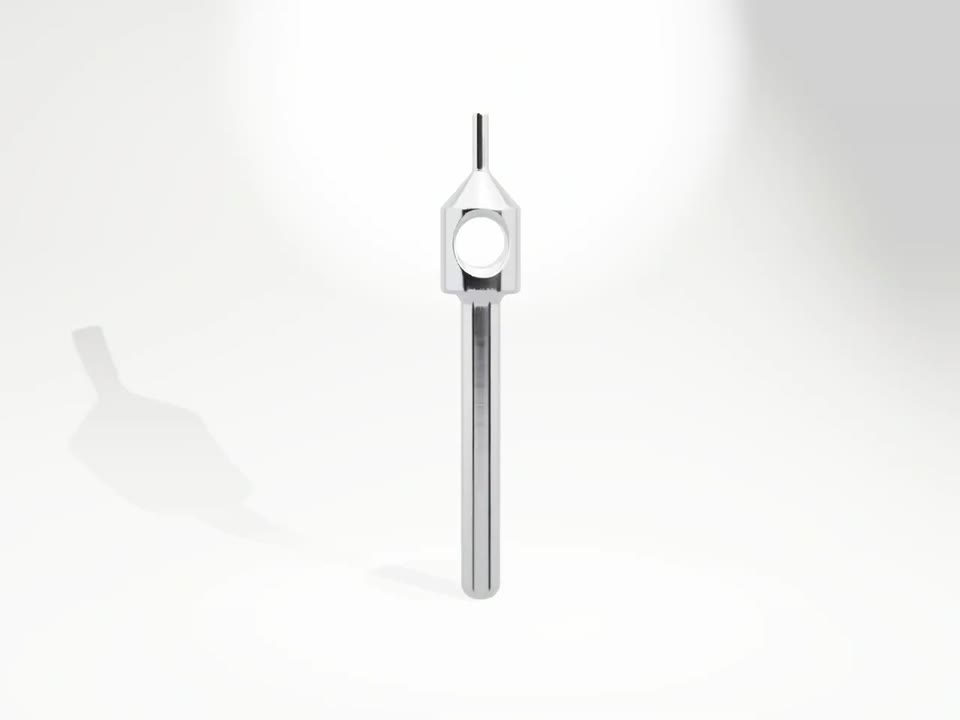
An instrument inventory is a matrix of diameters, widths and working lengths, and errors in it are silent and expensive. If a reorder delivers a subtly different punch, the difference comes to light mid-session, not on delivery. The structural fix is one order code per exact configuration, so "the usual punches" is not a guess. Ask to see the code list before you order rather than after, and do not accept ambiguous sizing from any supplier. At GARRY, every size carries its own order code, so a clinic reorders the same specification by code.
4. Do you inspect individually or by batch sample?
There is a real difference between inspecting a statistical sample of a batch and inspecting every unit. For fine cutting instruments where a single dull or chipped edge affects a real patient, individual inspection is meaningfully more rigorous. Ask which one you are buying. At GARRY, instruments are individually inspected, not batch-sampled - ask any supplier to state theirs on the record.
5. Will you disclose the exact material specification?
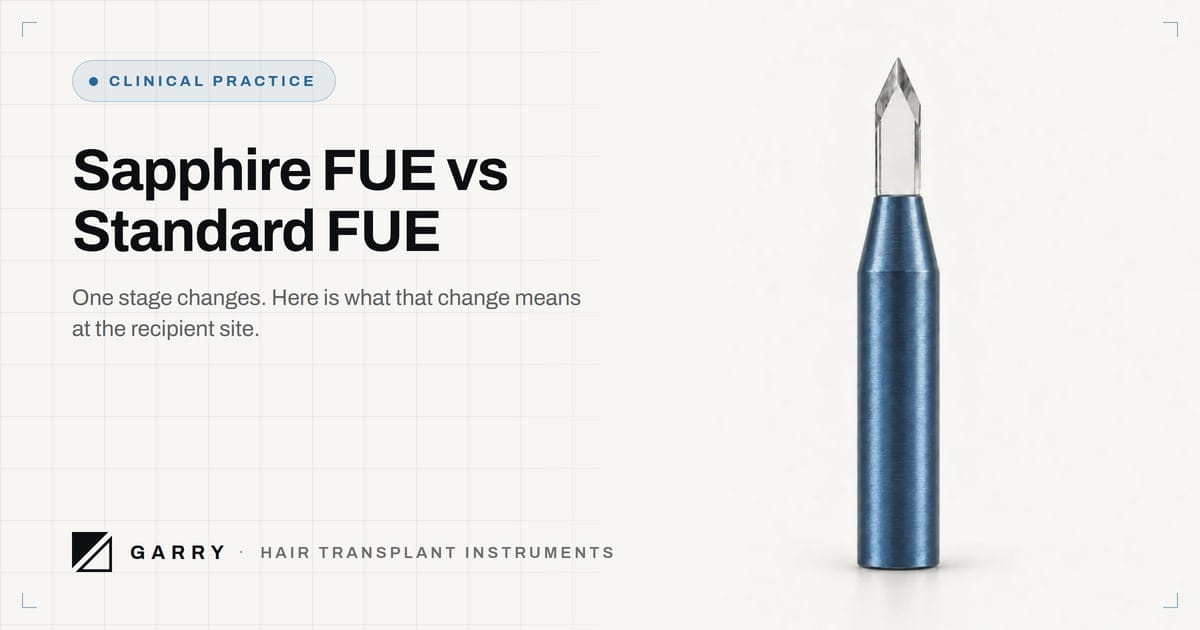
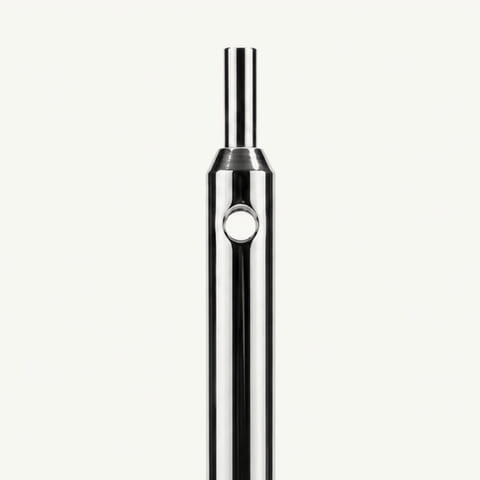
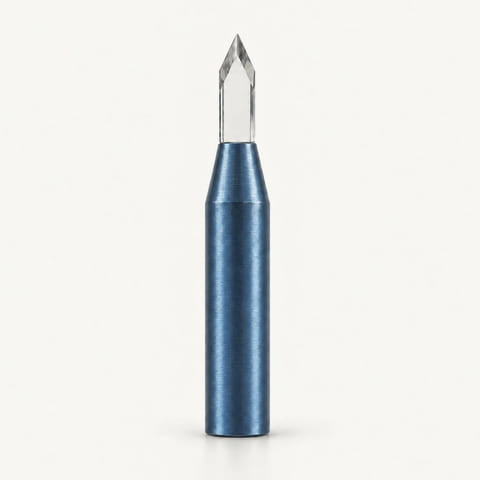
"Surgical steel" is not a specification. A serious manufacturer can tell you the actual material and why it was chosen - for example martensitic (hardenable, edge-holding) versus austenitic (tougher, corrosion-resistant) stainless, or a named tool steel, or sapphire for blades. GARRY states the material family for every instrument on its product page - Japanese Steel (Garry J-Steel) across the FUE punch line, sapphire crystal for blades. A supplier who cannot or will not name the material is asking for blind trust.
6. Where are these instruments actually made - and are they made by you or rebadged?
There is a large difference between a manufacturer and a reseller who buys generic instruments and prints a logo on them. Ask directly whether they make these or buy them in and rebadge them. Rebadging is not illegal, but it changes who is accountable for quality and continuity. GARRY designs and manufactures its instruments in Türkiye - the answer to "who made this" is a single accountable party, not a supply chain you cannot see.
7. How quickly do you turn a quote around?
Quote turnaround is a proxy for how the supplier is run. A manufacturer that can price a configured instrument list quickly is one that knows its own catalog, its sizes and its lead times without going to ask somebody else. A supplier that needs a week to answer a straightforward sizing question will not get faster once you are a customer. Ask for the turnaround as a commitment rather than an estimate. At GARRY, a quote request is answered within 24 hours on business days.
8. Can we get a sample or evaluation quantity before committing?
No clinic should standardise on an instrument its surgeons have not held. A confident manufacturer offers evaluation quantities so you can trial edges, geometries and handling in comparable sessions before a bulk commitment. Reluctance to provide samples usually points to margins that leave little room for quality, or to limited confidence in the product. GARRY provides evaluation quantities on quotation for exactly this reason.
9. What are the warranty terms, in writing?
Verbal reassurance is worthless at claim time. Ask for the warranty in writing and read what it actually covers. Honest warranty language covers defects in material and workmanship - it does not promise a fixed lifespan for a consumable cutting edge, and any "lifetime guarantee" wording on a disposable instrument should make you skeptical rather than reassured. Compare the written terms with how the instrument is actually used.
10. How consistent is reordering and after-sales support?
The instrument you evaluate is only as good as your ability to buy the same instrument again in a year. Ask about lead times, reorder consistency, and who you talk to when something is wrong. Continuity of specification matters. A surgeon who has settled on a preference should not have to run a new trial because the "same" product quietly changed. GARRY quotes within 24 hours on business days and keeps its lines consistent so a preference you establish today is reorderable tomorrow.
What good answers have in common
The pattern is the same across all ten. A strong supplier answers specifically and without defensiveness, offers to put things in writing, and invites verification. A weak one deals in adjectives - "premium," "surgical grade," "top quality" - and gets uncomfortable when you ask for the document behind the adjective. Asking these questions is part of the work a medical procurement decision requires.
Note too what a good supplier will admit - that a given instrument is not the right choice in every case, that a cheaper standard sometimes serves you better, and that a trial is a better guide than blind trust. Honesty about limits is itself a quality signal.
Take the checklist with you
Use these 10 questions as a checklist in any procurement conversation - with us or with anyone else.
Regulatory questions about GARRY instruments are answered in writing on request. When you are ready to put these questions to us directly, request a quote - we reply within 24 hours on business days.