Manual vs Motorized FUE - What Changes for Your Punches
An instrument maker's honest comparison of manual and motorized FUE - what each demands from the punch edge, where hybrid setups fit, and how to choose for your donor mix.
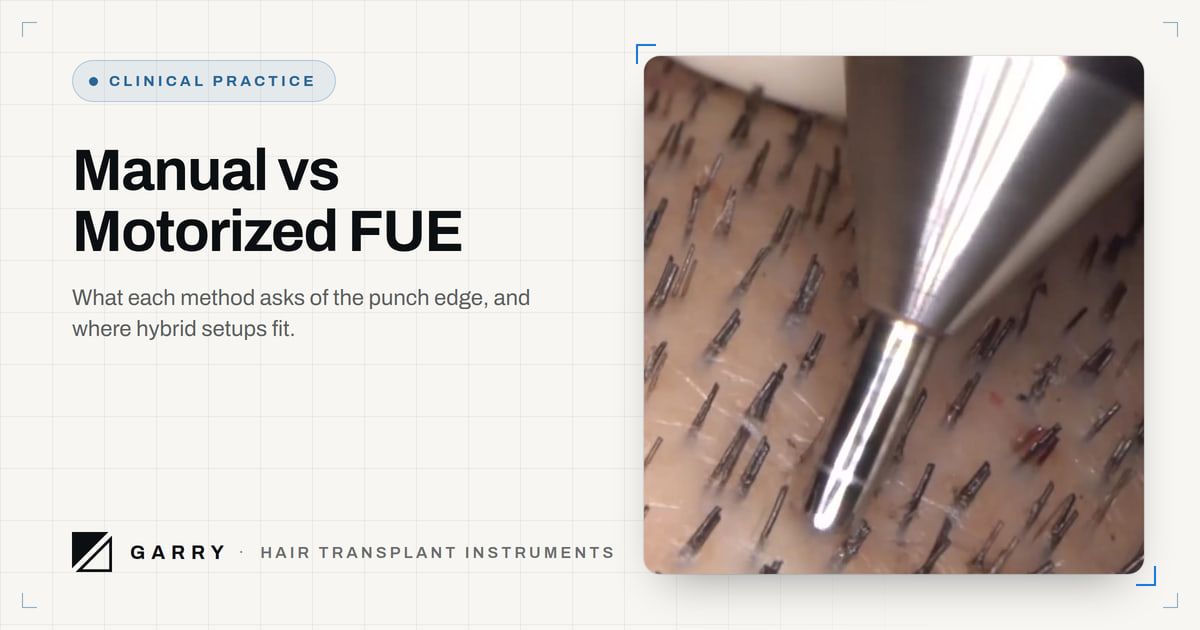
Search for "FUE machine" and you will find implanter kits, motorized handpieces and full consoles all jumbled together. Beneath the marketing, the real question is whether extraction should be powered by the surgeon's fingers or by a motor. Our punches are used in both setups, so this comparison comes from the instrument side - not which camp is right, but what each choice demands from the tool, and from you.
What "manual" and "motorized" actually mean
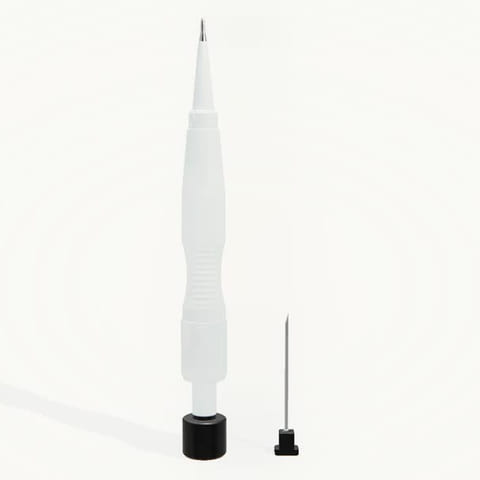
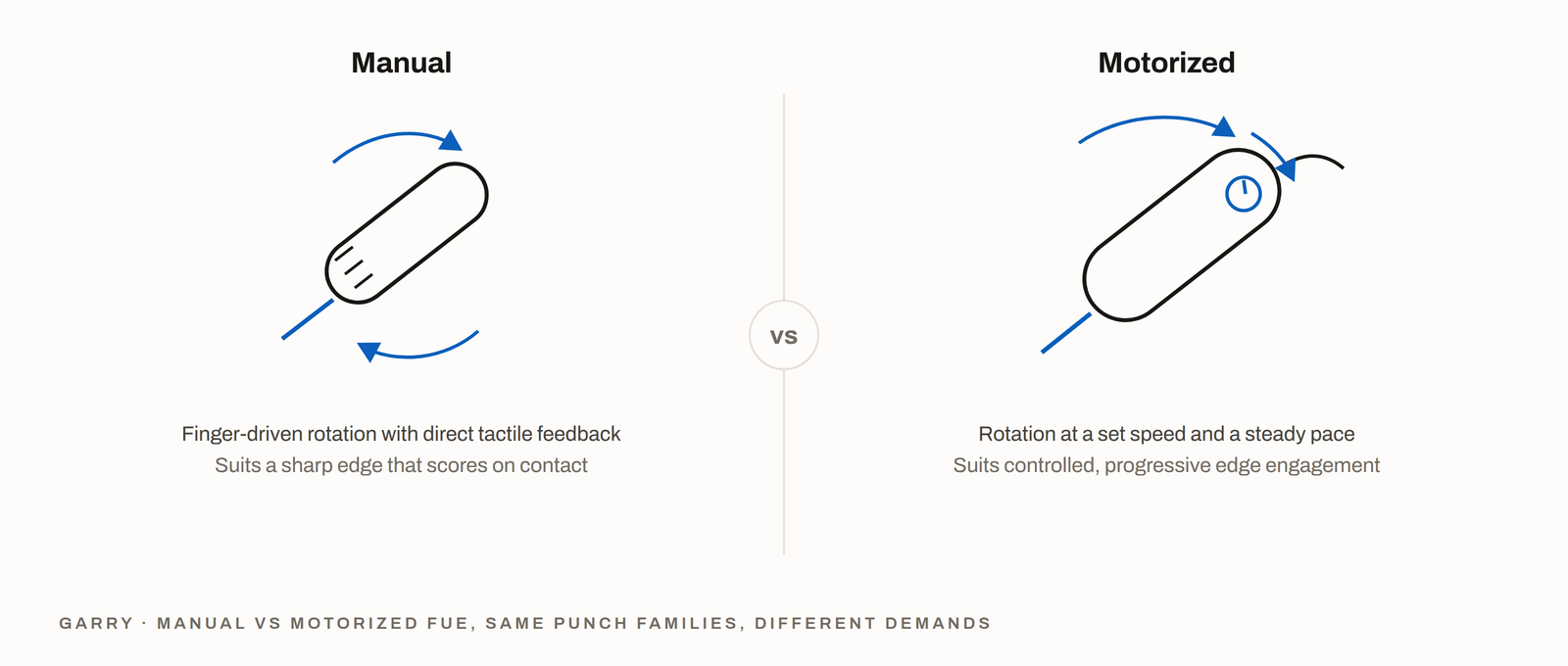
- Manual FUE - the punch sits in a hand-held holder, and the surgeon supplies rotation or oscillation with finger movement. Every entry is a felt event - resistance, give, release.
- Motorized FUE - the punch mounts in a powered handpiece that supplies rotation or oscillation at set speeds. The surgeon steers; the motor spins.
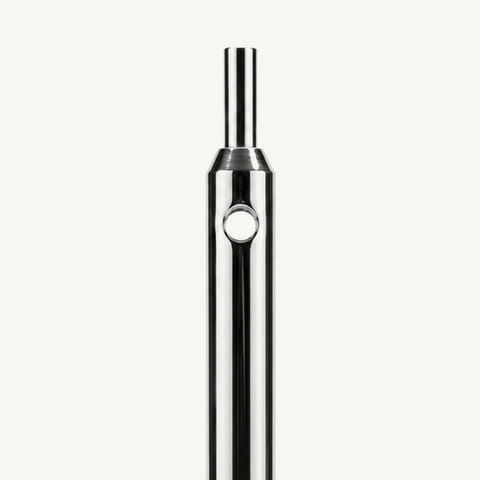
The punch itself - diameter, working length, edge geometry - exists in both worlds. What changes is the energy profile at the edge and the feedback loop with the operator.
The trade-offs in practice
| Consideration | Manual | Motorized |
|---|---|---|
| Tactile feedback | Direct - the fingers feel the tissue | Damped by the motor |
| Throughput on long cases | Limited by hand fatigue | Higher, more uniform pace |
| Frictional heat at the edge | Low rotational speeds | Managed by speed settings and technique |
| Learning curve | Long - feel takes time to build | Faster to basic competence |
| Equipment cost | Punch + holder | Punch + handpiece/console investment |
| Where it shines | Difficult, variable donors worked by feel | Sustained sessions at consistent rhythm |
Two observations lie behind that table. First, fatigue is a clinical variable - whatever a surgeon's hands can do at graft two hundred, the question is what they do at graft two thousand, and motors do not tire. Second, feel is a clinical variable too - scar tissue, caliber changes and angle shifts announce themselves through a manual holder in a way that a motor partially masks. That is why this debate has no winner - the two approaches distribute difficulty differently.
What each approach asks of the punch
This is the part written from the bench.
- Manual work rewards sharpness. With only finger force available, penetration force matters enormously. A sharp, contact-scoring edge is what makes touch-and-rotate entry possible at all.
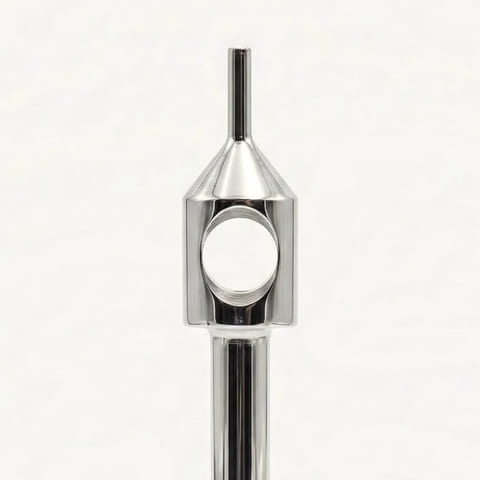
- Motorized work rewards controlled engagement. At powered speeds, an edge that engages progressively and manages friction matters more. Separating geometries with internal serrations, designed to part tissue planes after the initial score, pair naturally with powered rotation kept to sensible speeds - see the FUE punch sizes.
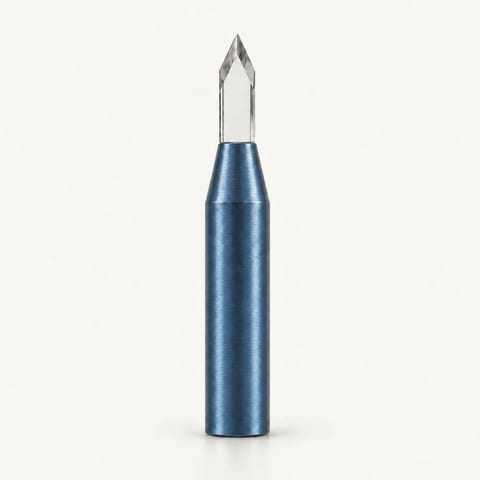
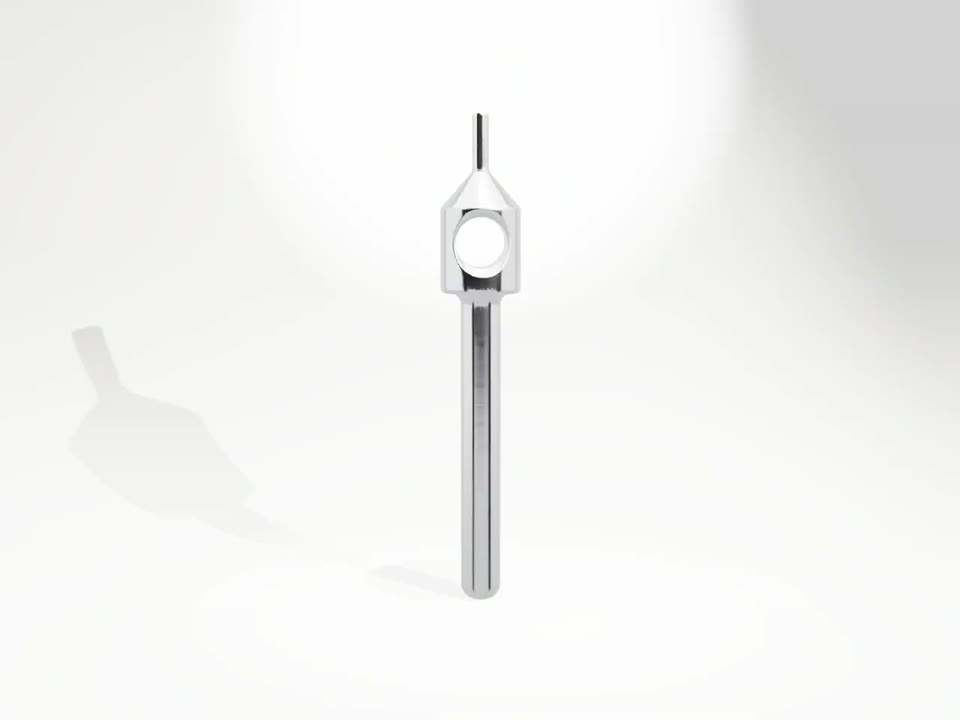
- With difficult donors, geometry matters more than the power source. On fibrotic or scarred tissue, a flared bevel that steers steel away from the follicle is useful in either setup. The Garry Fue Punch has a serrated cutting tip.
None of this is exclusive - the same punch sizes are used in both manual holders and motorized handpieces. But protocols run best when the edge philosophy and the power choice are picked together instead of colliding by accident.
The hybrid reality
Most experienced FUE surgeons are not purists. A common pattern among them is motorized extraction for the bulk of a straightforward donor, with a switch to manual for delicate zones, scar tissue or finishing work where feel matters. Instrument planning should assume this - which mostly means stocking punch geometries that cover both modes and a holder your surgeons actually like, rather than betting the protocol on one energy source.
Choosing for your clinic
Three questions settle most cases.
- What does your donor mix look like? Predominantly straightforward donors favour the throughput of motorized work; a practice that attracts difficult and repair cases will lean on manual feel more often.
- Who is extracting? A surgeon with years of manual feel has an asset worth using; a growing team standardising its rhythm may get more consistency from powered extraction.
- What does the session length demand? Long dense sessions push toward motors for fatigue reasons alone - with technique and speed discipline carrying the heat question.
Whichever way you lean, test before standardising. Run comparable sessions in each mode with the same punch sizes, and let the grafts and the team's fatigue guide the decision. Evaluation quantities are available for this.
Frequently asked questions
Is motorized FUE better than manual? Neither is better; they distribute difficulty differently. Throughput and fatigue favour motors; tactile feedback and difficult tissue favour hands.
Do I need different punches for a motorized handpiece? The same punch families serve both modes. What changes is which edge philosophy pairs most naturally with your speed and technique - sharpness leans manual, controlled engagement leans motorized.
Does motorized FUE damage grafts with heat? Frictional heat is a managed variable, governed by speed settings, edge quality and operator technique. It is a reason for discipline, not a verdict on the method.
What is a "hybrid" FUE setup? It means running both, motorized for bulk extraction and manual where feel matters. It is the most common configuration we see in experienced teams.
Do most hair transplant surgeons use manual FUE or NeoGraft? NeoGraft is one brand of motorized FUE system, so this is really the manual versus motorized question again. Both approaches are in wide professional use and there is no reliable published count of which dominates; many high-volume clinics run both. The practical answer is the trade-off above. Throughput and fatigue favor motors, tactile feedback and difficult tissue favor hands, and the same punch families serve either mode.
Whatever drives the rotation, the edge does the work. GARRY manufactures its FUE punch line in Türkiye across Ø 0.60 to 0.90 mm in 7 inner diameters and 5 working lengths. Every punch is individually inspected before it ships, and each size has its own order code. Request a quote with your setup and sizes; we reply within 24 hours on business days.