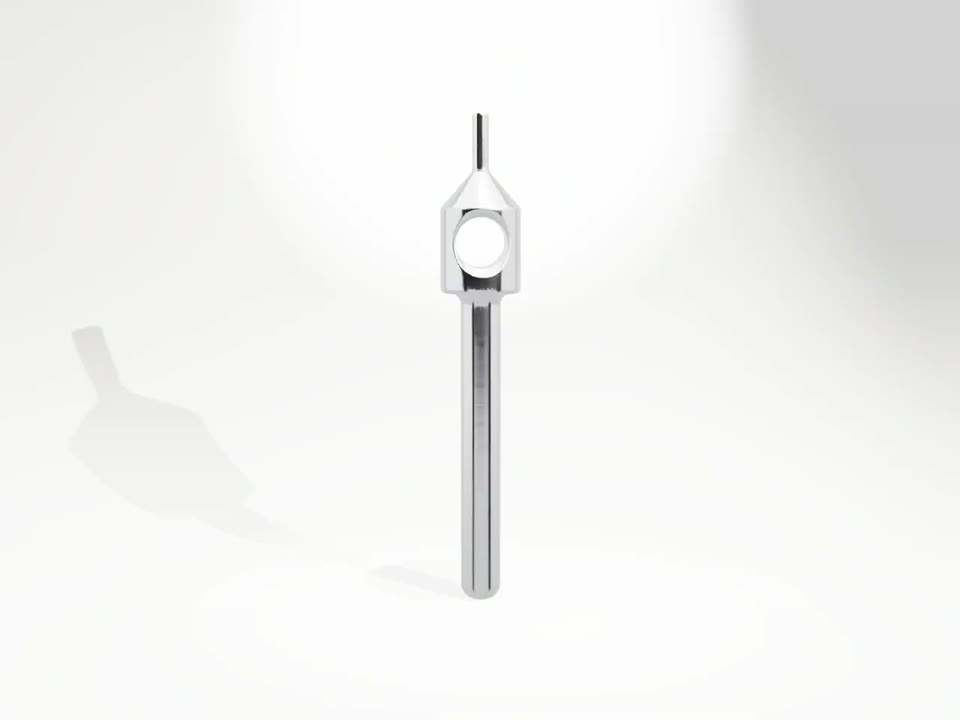
Serrated FUE Punch - What the Serrated Tip Is Designed to Do
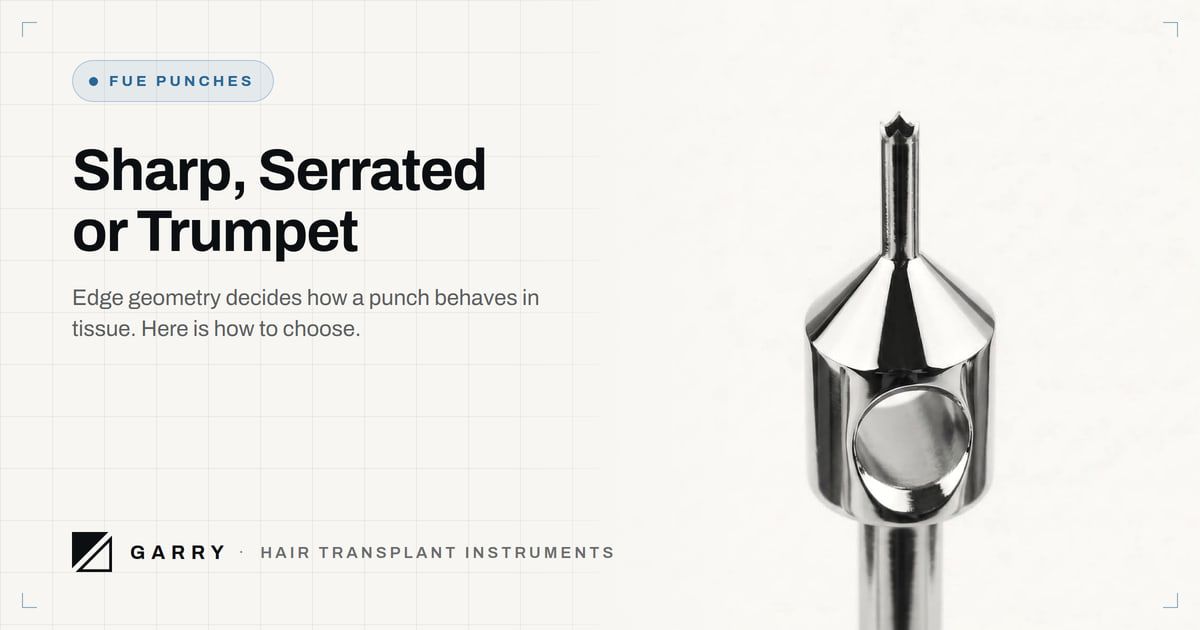
A serrated FUE punch carries a row of fine teeth on its cutting rim, designed to seat on the skin at first contact and to separate the tissue planes around the follicular unit after the score. This guide explains the tip with the Garry Fue Punch, serrated in all 35 sizes, as the example.
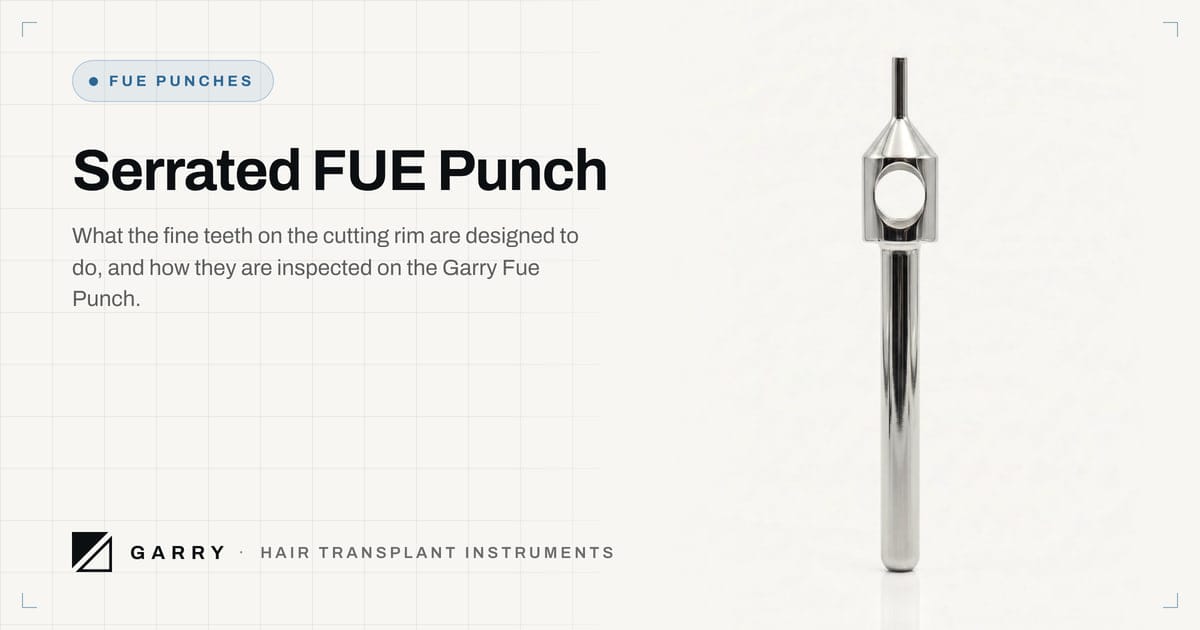
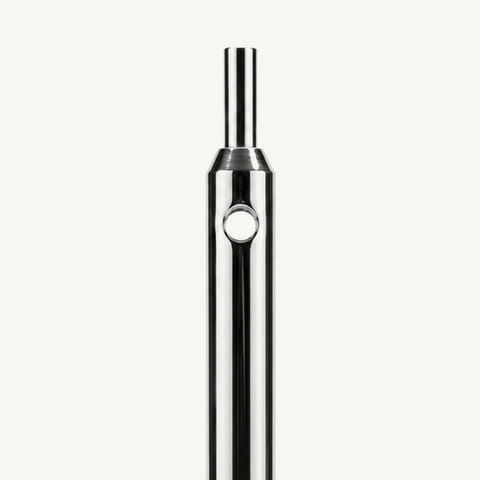
A serrated FUE punch is a follicular unit extraction punch whose cutting rim carries a row of fine teeth instead of one continuous edge. The teeth are designed to seat on the skin at first contact instead of skating across it and, once the rim has scored the skin, to separate the tissue planes around the follicular unit rather than keep cutting. The Garry Fue Punch has this serrated cutting tip in every one of its 35 sizes, so a clinic that orders from the Garry line is ordering a serrated punch by definition and chooses only the inner diameter and the working length. This guide explains what the serrations are, what they are designed to do in tissue compared with a plain sharp edge, how the tip is inspected before it ships, how a serrated punch is sized and how it is cared for, with the Garry Fue Punch as the worked example.
What a serrated FUE punch is
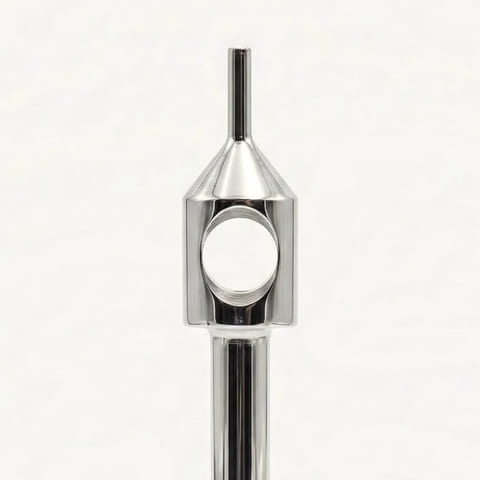
A FUE punch is a hollow, thin-walled tube. Only its rim cuts. The rim scores the skin around one follicular unit to a set depth so that the unit, with the tissue around it, can be freed and lifted with fine forceps. Everything that distinguishes one punch from another at the moment of cutting happens on that rim, which is why punch makers describe their instruments by the geometry of the tip.
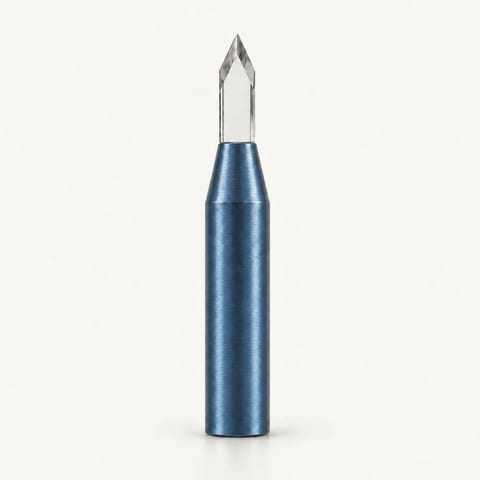
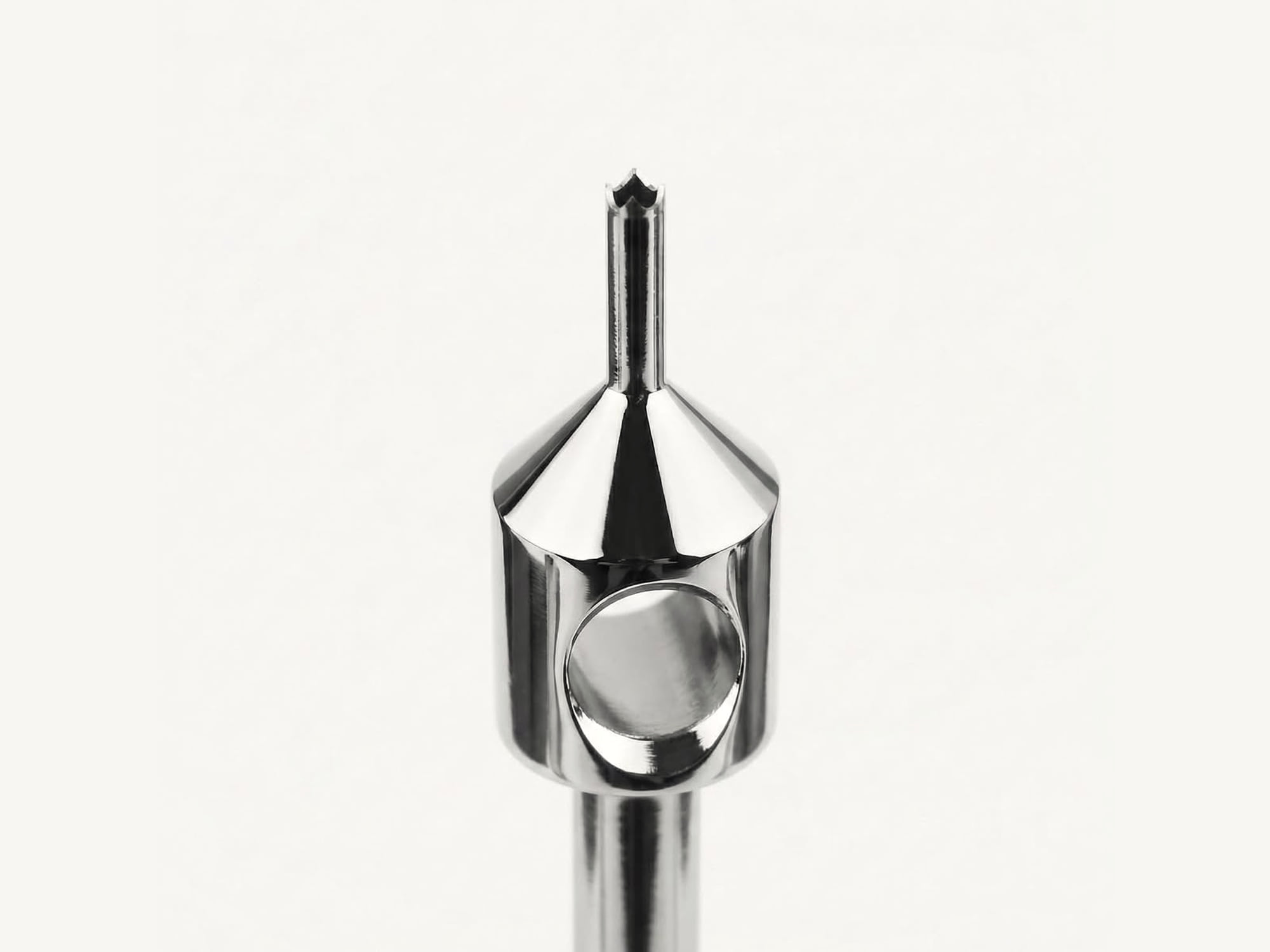
On a serrated punch the rim is ground into a row of small, regular teeth. The teeth are fine in relation to the diameter of the tube, so to the eye the rim still reads as a circle, and the serration shows under magnification. 2 forms of serration are described in the field. Outer serration places the teeth on the outside of the rim, where they meet the skin first. Internal serration places them on the inside, where they meet the tissue around the unit once the rim has entered. On the Garry Fue Punch the specification row of every product page reads Edge, Serrated, and the tip profile is defined on the technical drawing of each size.
Serration is a tip geometry, not a size. The Garry Fue Punch is made in one geometry, with the serrated cutting tip in every size, and Garry does not offer sharp, blunt, trumpet or hybrid variants. The 2 choices a buyer makes are the inner diameter and the working length, which the sections below set out.
What the serrated tip is designed to do
The design intent of a serrated rim covers 2 moments of the extraction.
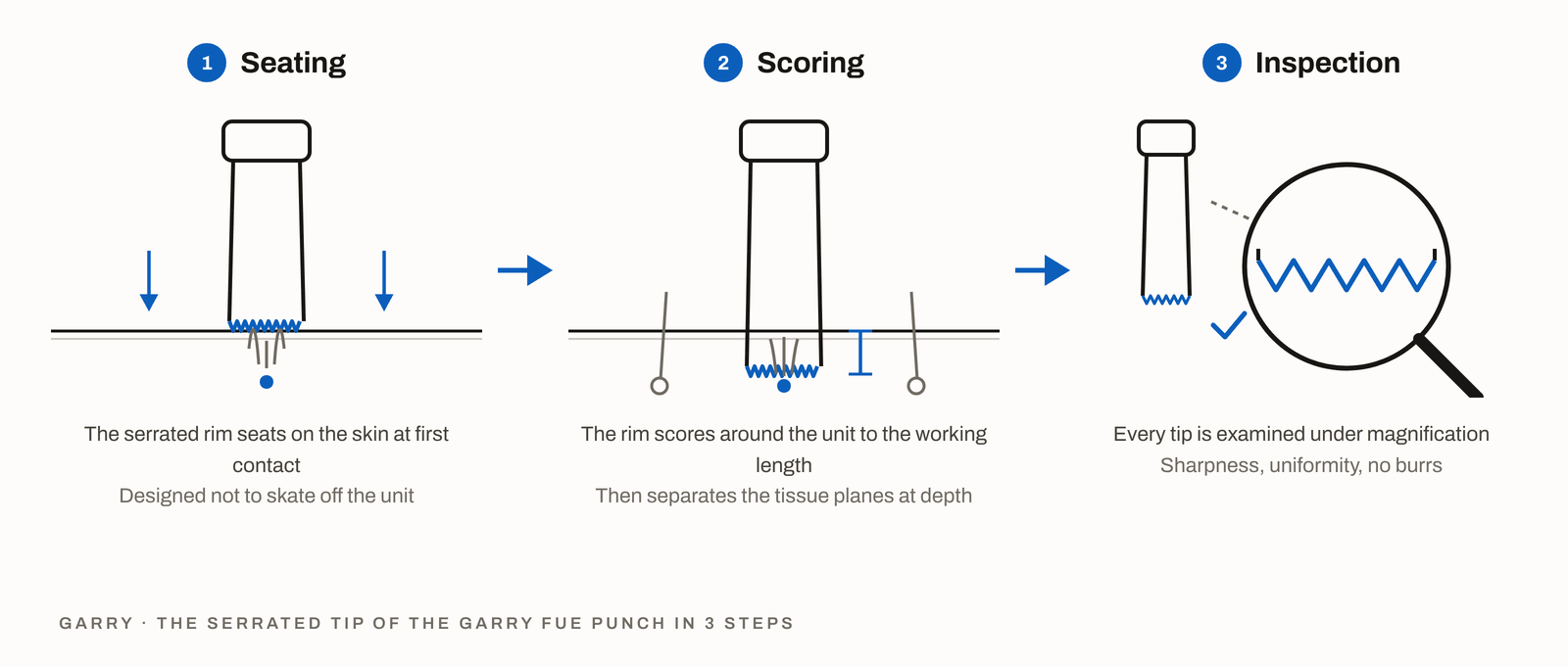
First contact. A continuous sharp edge meeting skin at an angle can slide a short distance before it bites, which surgeons call skating. Skating moves the punch off the centre of the follicular unit before the score begins. The teeth of a serrated rim are designed to seat on the skin at first contact, so the punch starts its score where it was placed.
After the score. Once the rim has cut through the surface, the tissue around the follicular unit has to be parted from the tissue outside the punch. A serrated rim is designed to separate those tissue planes as the punch advances, rather than to keep cutting through everything in its path. The design intent is a gentler passage around the unit at depth.
Surgeons commonly reach for serrated geometry when the problem is punch skating on entry, when the donor is dense, when hairs exit at curly or acute angles, or when the tissue is fibrous and resists a plain edge. None of this is an outcome promise. How a serrated punch behaves in a given pair of hands is judged on comparable sessions, and a small first order can be quoted on request so a team can form its own view.
Serrated, sharp and trumpet tips compared
The 3 tip geometries most often named by FUE teams are designed for different jobs, and the table puts them side by side. The right column says which of them Garry makes.
| Tip geometry | Designed to | Commonly chosen for | In the Garry line |
|---|---|---|---|
| Plain sharp | Cut fastest with the least rotation | Routine first-pass scalp | Not offered |
| Serrated | Seat without skating, then separate tissue planes after entry | Dense donors, curly or acute exit angles, fibrous tissue | Every Garry Fue Punch size |
| Trumpet (flared) | Steer the rim away from the follicle as depth increases | Fibrotic or scarred tissue | Not offered |
A clinic that works with all 3 geometries keeps them for different donors. A clinic that works with Garry works with the serrated tip and varies the diameter and the working length instead. The general comparison of the 3 families, with the arguments for each, is in our punch geometry guide.
How the serrated tip is inspected before it ships
A row of fine teeth is only useful if every tooth is there and the rim is uniform, so the tip is where inspection matters most on a serrated punch. The Garry Fue Punch is crafted from Japanese Steel (Garry J-Steel), machined and finished at our facility in Türkiye, and every punch is inspected individually before it ships. There is no sampling plan. Each punch goes through 5 release checks.
- Cutting edge. The rim is examined under magnification for sharpness, uniformity and the absence of burrs or defects, tooth by tooth.
- Geometry. The overall geometry, the window design and the tip profile are checked against the technical drawing of that size.
- Surface finish. The shaft and the head are inspected for surface finish, smoothness and visual defects.
- Function. The lumen is checked for patency and the tip is inspected for a clean, consistent cut.
- Size verification. The inner diameter and the working length are measured and matched to the catalog size and its order code.
Because each size has one defined specification and its own order code, a reorder of the same code is made to the same drawing as the first delivery. The release checks are described in more detail on the product pages and on the Production page.
Sizing a serrated FUE punch
Serration does not change the sizing rule. The inner diameter is chosen for the graft caliber and the working length for the follicle depth, exactly as for any FUE punch. What the serrated tip adds is that the same rim behaviour is available at every size in the line.
The Garry Fue Punch is made in 7 inner diameters, Ø 0.60, 0.65, 0.70, 0.75, 0.80, 0.85 and 0.90 mm, in steps of 0.05 mm, and each diameter comes in 5 working lengths, 2.5, 3.0, 3.5, 4.0 and 5.0 mm. That gives 35 sizes, each with its own order code, from PCH-060-25 to PCH-090-50. The code names both dimensions. PCH-080-40 is a punch of Ø 0.8 mm inner diameter with a 4.0 mm working length.
| Inner diameter | Typical use | Order codes |
|---|---|---|
| Ø 0.60 and 0.65 mm | The finest calibers and single-hair units | PCH-060-25 to PCH-065-50 |
| Ø 0.70 and 0.75 mm | Fine calibers, single-hair units and hairline work | PCH-070-25 to PCH-075-50 |
| Ø 0.80 mm | The standard size, mixed 1 to 3 hair units | PCH-080-25 to PCH-080-50 |
| Ø 0.85 and 0.90 mm | Fuller multi-hair units and coarse calibers | PCH-085-25 to PCH-090-50 |
The working length is the stop that sets how deep the rim travels before the unit is freed. 2.5 mm is the shallowest stop in the line, 3.5 mm the standard middle, 4.0 mm a deeper stop for longer follicular units and 5.0 mm the deepest, for deep-seated donor hair. The printable Fue Punch Selection Chart sets diameters, typical use and order codes side by side, and the punch size guide goes through both dimensions in depth. Most teams stock 2 or 3 neighbouring diameters and select per donor.
For no-shave cases, where the graft leaves the donor area with its hair shaft still long, the Garry Long Hair Fue Punch is a separate family designed for long hair, in Ø 0.80, 0.85 and 0.90 mm at a 4.0 mm working length.
Using and caring for a serrated punch
3 habits protect the teeth on the rim, and they are the same habits that protect any fine edge.
At the chair. Align the punch with the exit angle of the hair, because the serrated rim is designed to seat where it is placed and a misaligned seat is still a misaligned score. Tumescence firms the skin and gives the rim a more consistent cutting plane. Follicle transection during extraction is influenced mainly by how well the diameter matches the graft caliber, how well the working length matches the follicle depth, the alignment with the exit angle and the condition of the edge, and the serration changes none of those 4 factors.
After the session. The Garry Fue Punch is supplied non-sterile and is reprocessed between uses. Rinse it immediately after the session and flush the lumen before debris dries, clean it ultrasonically in a neutral-pH detergent, clean the lumen by flow rather than with wires or brushes, dry it completely and steam-sterilize it at 134 °C. For a lumened instrument a prevacuum cycle is generally the appropriate choice, as our autoclave cycle guide explains. Saline and chlorine-based agents are kept away from the steel.
In storage. The punch ships in an autoclavable hard-shell case, which is also where it lives between uses. Fine teeth are the first part of a punch to suffer from contact with a hard surface, so the rim is kept off trays and other instruments. Inspect the edge before each use and withdraw any punch that shows wear, damage or corrosion. Garry does not publish a number of uses, because how soon an edge wears depends on the donor tissue, the technique and the reprocessing, and Garry does not re-sharpen or refurbish instruments. A worn serrated punch is replaced by its order code.
Questions buyers ask about serrated FUE punches
Does Garry make a plain sharp or a trumpet punch? No. The Garry Fue Punch is made in one geometry, with a serrated cutting tip in every size, and Garry does not offer sharp, blunt, trumpet or hybrid variants or custom geometries.
Is a serrated punch harder to use than a sharp one? It behaves differently at entry, because it is designed to seat rather than slide, and teams used to a plain edge notice that in the first sessions. Whether it suits a given operator is judged on comparable sessions, which is why a small first order can be quoted on request.
Does the serration change which size I should order? No. The diameter still follows the graft caliber and the working length still follows the follicle depth. A team that extracts mixed units with a Ø 0.8 mm punch of another geometry starts with the same diameter in the Garry line.
Can I see the serration on the punch I receive? Yes, under magnification. To the eye the rim reads as a circle, and a loupe shows the row of teeth. The same magnification is used at release inspection.
How do I know the punch matches the size I ordered? Each released punch is matched to the catalog size it was made to and carries that size's order code. The inner diameter and the working length are measured before release, so a delivery can be checked against the order, code by code. The Fue Punch questions and answers cover the line in more depth.
Ordering the Garry Fue Punch
Every size has its own product page, for example the Garry Fue Punch 0.8 mm - 4.0 mm, and the family page lists all 35 order codes. Send the codes and quantities you need, or your donor profile and graft mix, through the contact page, and we answer in writing with pricing and availability within 24 hours on business days. The punch is sold individually or in boxes of 10, direct from the manufacturer in Türkiye with no importer in between. Distributors who want to carry the line can apply for a dealer account.