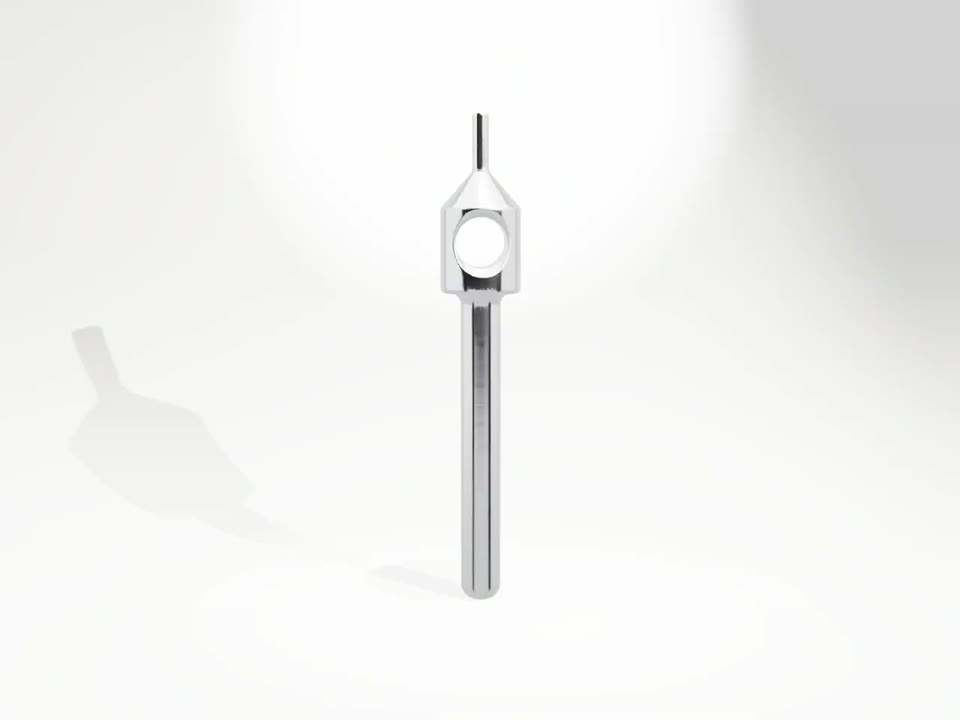
Sharp, Serrated or Trumpet - Choosing FUE Punch Geometry
Punch diameter gets the attention, but edge geometry decides how the punch behaves in tissue. What sharp, serrated and trumpet edges are each designed to do, and how surgeons match geometry to donor characteristics.
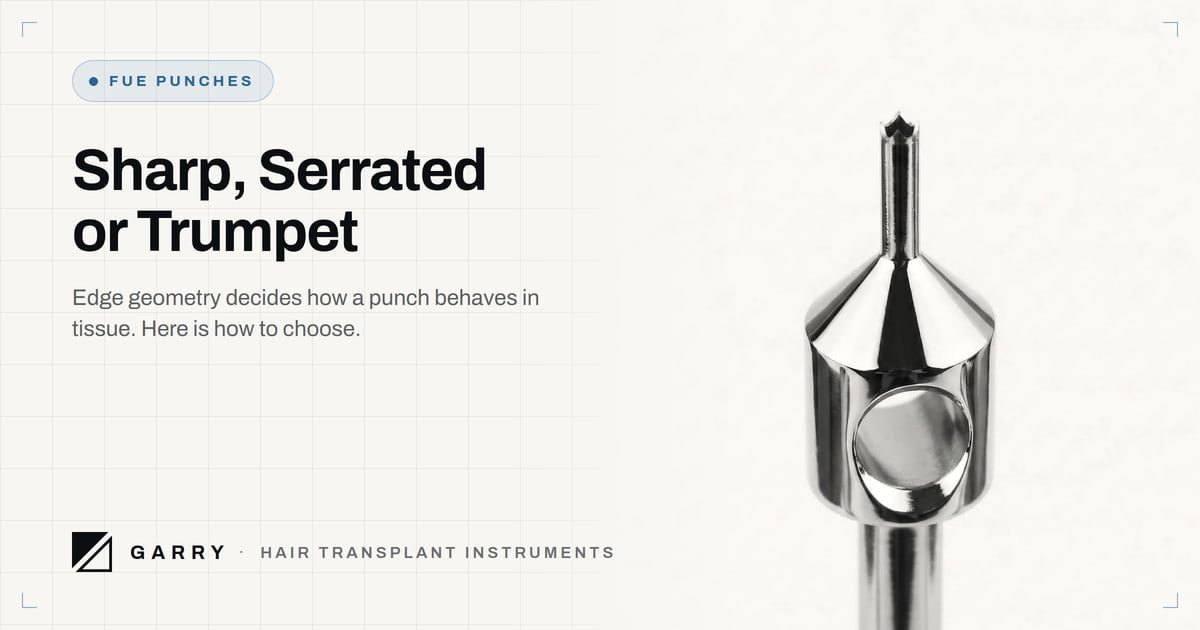
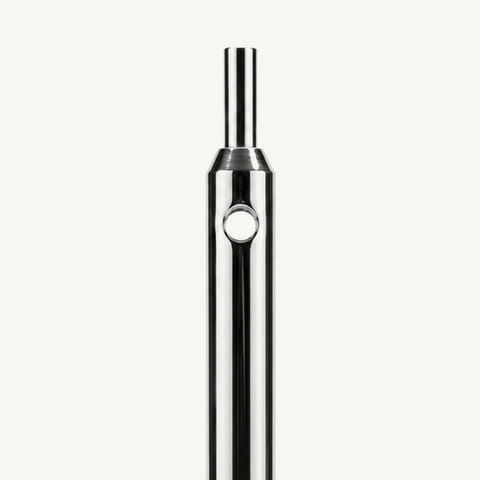
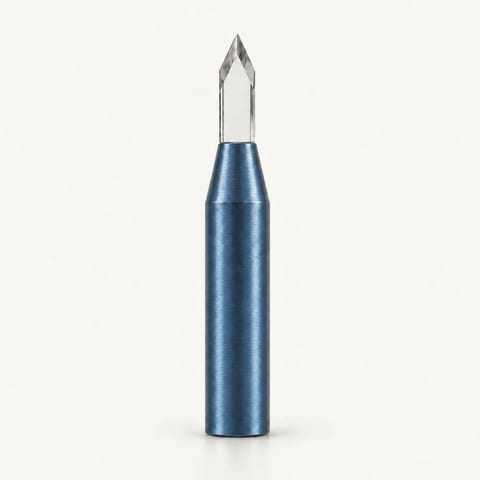
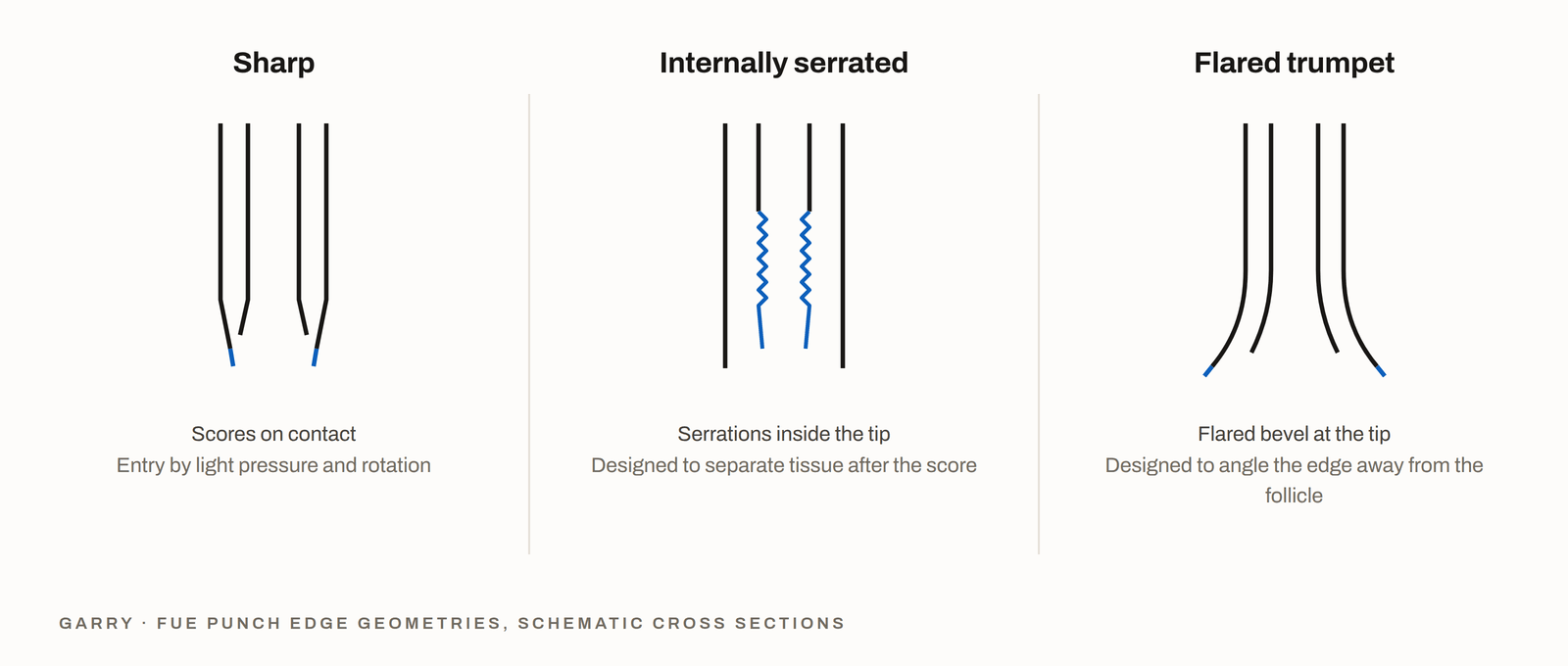
Diameter decides how much tissue the punch encircles; geometry decides how the edge engages it. A sharp edge is designed to cut fastest with the least rotation, a serrated edge to seat without skiving and separate planes after entry, and a trumpet (flared) edge to steer the cutting rim away from the follicle as depth increases. Most donor areas can be harvested with more than one geometry; the choice is about which failure mode you most want to design against.
The three edge families
Sharp
This is the classic geometry, a continuously ground cutting rim. It scores the skin with minimal rotation and minimal force, which is why it remains the default for routine donor tissue. The cost of that efficiency is that the edge follows exactly where it is pointed; angle control rests entirely with the operator. In practiced hands on regular tissue, sharp punches are fast and predictable.
Serrated
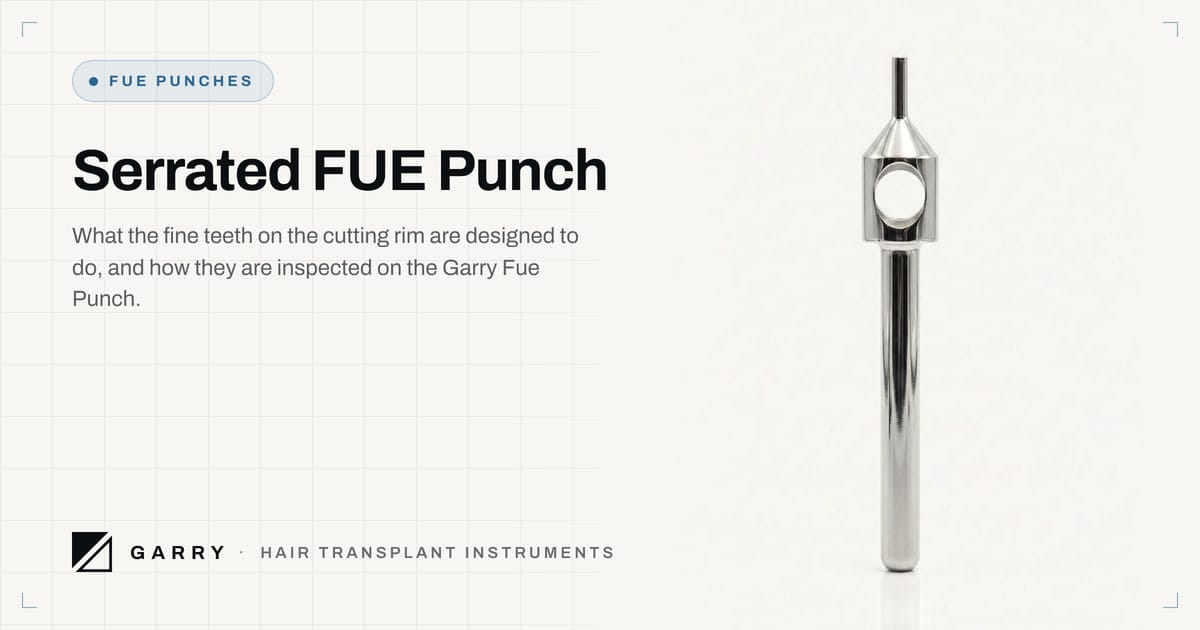
The rim carries fine teeth. Outer micro serration is designed to seat on the skin at first contact instead of sliding off dense or curly hair exit angles; internal serration is designed to separate tissue planes after the initial score rather than continuing to cut. Surgeons commonly reach for serrated geometries when the problem is punch skating on entry or resistance in fibrous tissue.
Trumpet (flared)
The tip flares outward, so as the punch advances, the cutting portion of the rim moves away from the center line where the follicle sits. The design intent is protection at depth - the deeper the punch goes, the less the edge points at the graft. Flared geometries are often preferred on scarred or fibrotic donors and in second-pass surgeries, where the tissue no longer behaves like first-pass scalp.
Matching geometry to the donor
| Donor situation | Commonly chosen geometry | Design reasoning |
|---|---|---|
| Routine first pass scalp | Sharp | Fastest engagement, least rotation |
| Dense, curly or acute exit angles | Serrated | Seats at contact, resists skating |
| Fibrotic or scarred tissue | Trumpet | Edge steered off the follicle at depth |
| Long hair / no shave protocols | Dedicated long hair geometry | Shaft must survive the excision; see the no shave FUE guide |
| Beard and body donors | Selected per region | Caliber and depth differ; diameter and working length are chosen per zone |
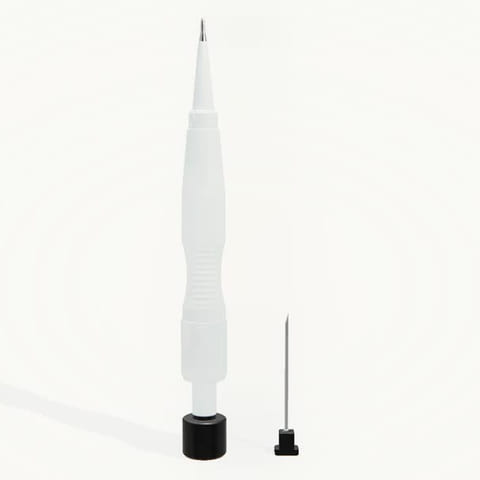
Two practical notes. First, geometry does not replace technique - every edge family rewards angle discipline and punishes improvisation, which is one reason manual and motorized workflows both remain in serious use. Second, geometry interacts with diameter and working length; the full sizing logic lives in our punch size selection guide and the printable punch selection chart.
What we make
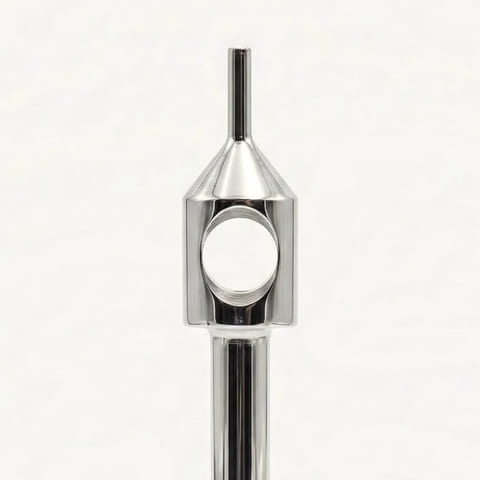
The Garry FUE punch line runs from Ø 0.6 to 0.9 mm in 7 inner diameters and 5 working lengths, with every size carrying its own order code so an inventory stays reorderable without ambiguity. Punches are machined in Türkiye and inspected piece by piece before release, with no sampling plans, and they come direct from the manufacturer with no importer in between. The Garry Fue Punch has a serrated cutting tip in every size; if you are standardizing an inventory across surgeons, tell us the size mix in a quote request.