Long Hair FUE - How No-Shave Extraction Works
What long-hair (no-shave) FUE actually changes - for the patient, for the team, and above all for the punch. A practical look at the premium no-shave capability in modern FUE.
Ask clinics what capability patients request most often and one answer keeps coming back - "can you do it without shaving my head?" Long-hair FUE - also called no-shave FUE - answers yes. The donor area is not shaved; follicular units are excised with the hair shaft left intact. It is one of the strongest premium offers a clinic can add, and one of the most technique-demanding. This guide explains how the workflow differs from standard FUE, and what it asks of the punch, the instrument that does the work.
What "no-shave" actually means
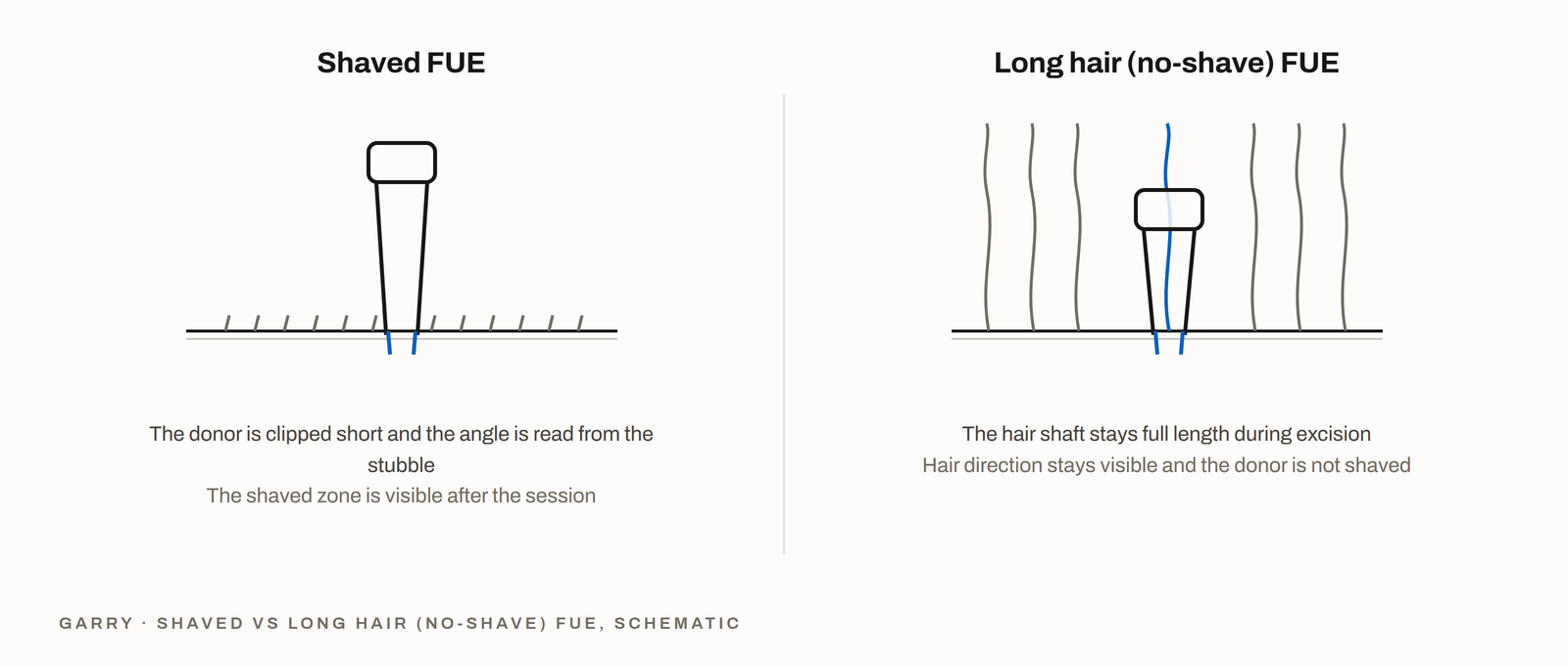
In standard FUE the donor area is clipped short so the surgeon can read follicle angles and the punch can seat cleanly. In long-hair FUE the donor stays at full length. Each unit is excised with its shaft intact, which changes three things at once.
- The donor area stays unshaved. No shaved patch has to grow out - the reason demand for this technique keeps growing, especially among patients who cannot take social downtime.
- The surgeon sees hair direction at placement. Because grafts carry full-length hair, direction, angle and coverage are visible at placement - the planned coverage can be judged at placement instead of imagined months ahead.
- The instrument problem gets harder. A long shaft must survive excision without being cut, kinked or stripped. That is an edge-geometry problem, and it is why long-hair FUE is as much an instrument question as a technique question.
What long-hair work demands from the punch
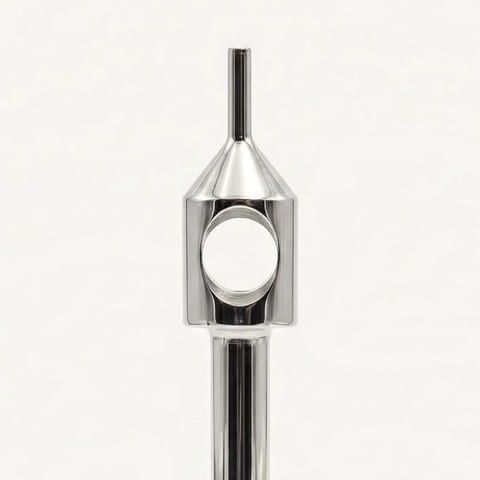
A standard punch only has to encircle the unit below the surface. A long-hair punch must do that while a full-length shaft passes through or alongside the cutting path. Across the field, designs approach this with modified tip architectures - recesses, slots or grooves that give the shaft somewhere to go while the edge scores the unit. Whatever the specific architecture, the engineering goals are the same.
- Protect the shaft. The hair must exit the excision unbroken - a snapped shaft defeats the purpose of the technique.
- Keep the excision quality. Shaft protection cannot come at the cost of a ragged cut around the unit itself.
- Stay workable at speed. A geometry that only works at a crawl rarely survives contact with a real session plan.
This is also why long-hair FUE leaves little room for improvisation. Running the technique with a standard punch and hoping for the best tends to produce the broken shafts and stripped grafts the specialty geometry exists to prevent.
What it demands from the team
The punch is necessary but not sufficient. Published clinical experience with no-shave techniques agrees that long-hair excision takes longer per graft and demands more from the operator than shaved FUE - long strands can obscure the follicle's true angulation, and handling full-length grafts at placement is its own discipline. For a clinic adding the service, the practical consequences are these.
- Price and schedule it as the premium service it is - session time is genuinely longer.
- Build the team's rhythm on smaller cases before offering full sessions.
- Plan placement accordingly, since full-length grafts pair naturally with forceps placement or with implanter workflows sized generously for the graft.
Where it fits commercially
Fewer teams offer long-hair FUE than standard FUE, and patient demand for it is strong - a classic supply gap. For a clinic, that is differentiation and margin. For a dealer, it opens doors. A clinic that already buys standard punches elsewhere will still take a meeting about a capability its competitors lack. It is exactly the kind of line item worth carrying alongside the standard FUE punch geometries.
The GARRY long-hair punch
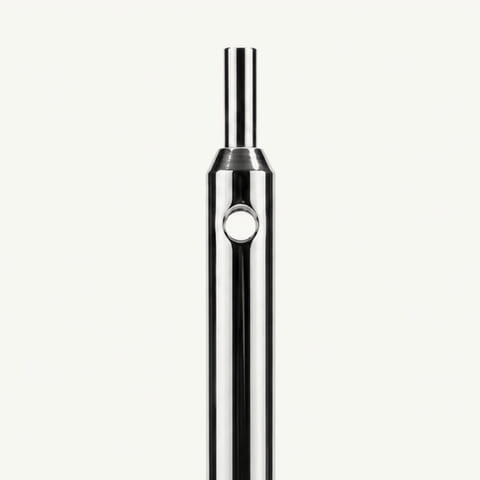
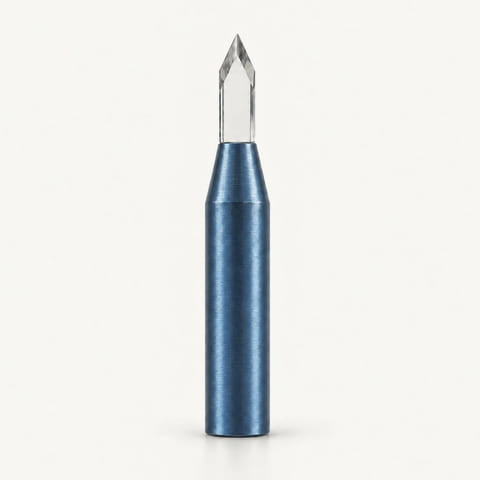
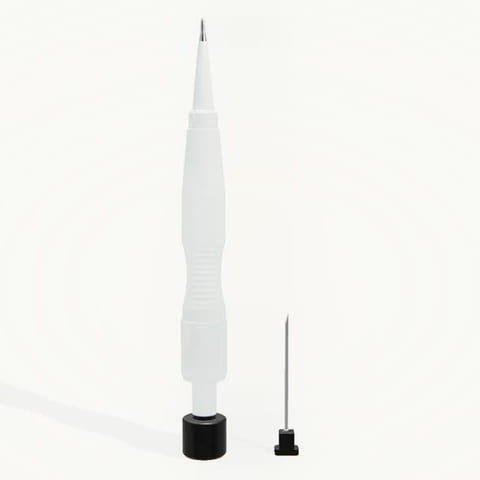
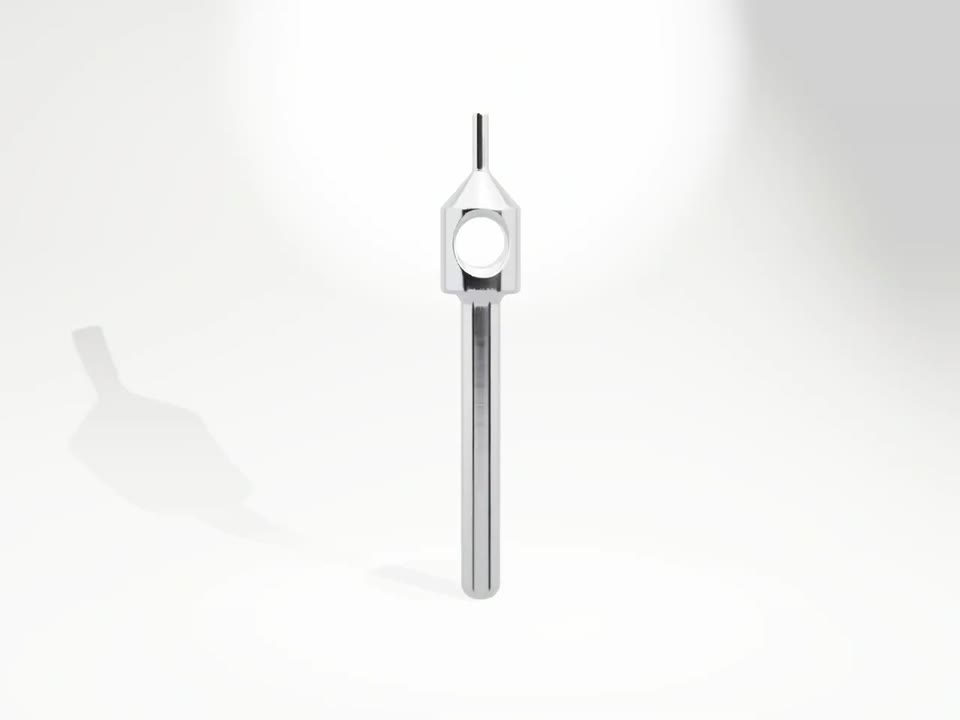
GARRY manufactures a dedicated Long Hair Fue Punch in Türkiye, designed for shaft-intact excision and inspected individually like every instrument in the line. It is published in 3 diameters, 0.80, 0.85 and 0.90 mm, with a 4.0 mm working length (LPCH-080-40, LPCH-085-40 and LPCH-090-40), and evaluation quantities are available so your surgeons can trial the technique in comparable sessions before you standardise a no-shave offer.
Frequently asked questions
Is long-hair FUE a different technique or a different instrument? Both. The workflow changes (unshaven donor, hair direction visible at placement) and the punch changes (shaft-intact tip architecture). Neither works well without the other.
Can any FUE surgeon offer no-shave immediately? The skills transfer, but the technique has its own learning curve - angle reading through full-length hair and shaft-safe handling take deliberate training.
Is every case a candidate? No - donor characteristics and session size still govern. Many clinics offer no-shave for select cases and standard FUE for the rest; the two coexist on the same tray.
Does long-hair FUE replace shaved FUE? No. It is a premium option offered alongside it. Most practices that add it keep standard FUE as the volume workflow - see our FUE instrument guide for the full picture.
If you are adding a no-shave offer or supplying clinics that want one, request a quote for the Long Hair Fue Punch - we reply within 24 hours on business days, and evaluation quantities are available.