
Buying Hair Transplant Instruments - A Clinic Procurement Guide
A structured way for clinics to specify, evaluate and standardize a hair transplant instrument inventory - what to define before asking for quotes, what to check on delivery, and how to keep reordering boring.
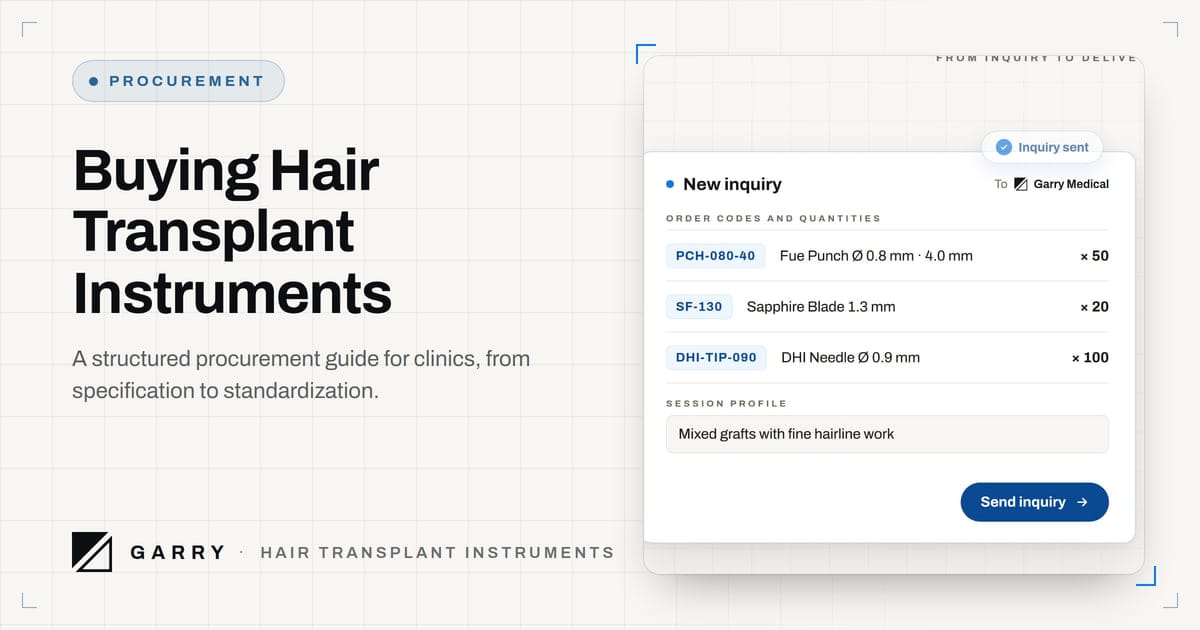
Good instrument procurement is mostly a matter of specification. Clinics that write down their protocol (techniques offered, session profile, per-operator preferences, reprocessing setup) before contacting suppliers get accurate quotes, comparable offers and straightforward reorders. Clinics that shop by product photo inherit whatever the photo did not show.
Step 1 - specify before you shop
Write one page that covers the following.
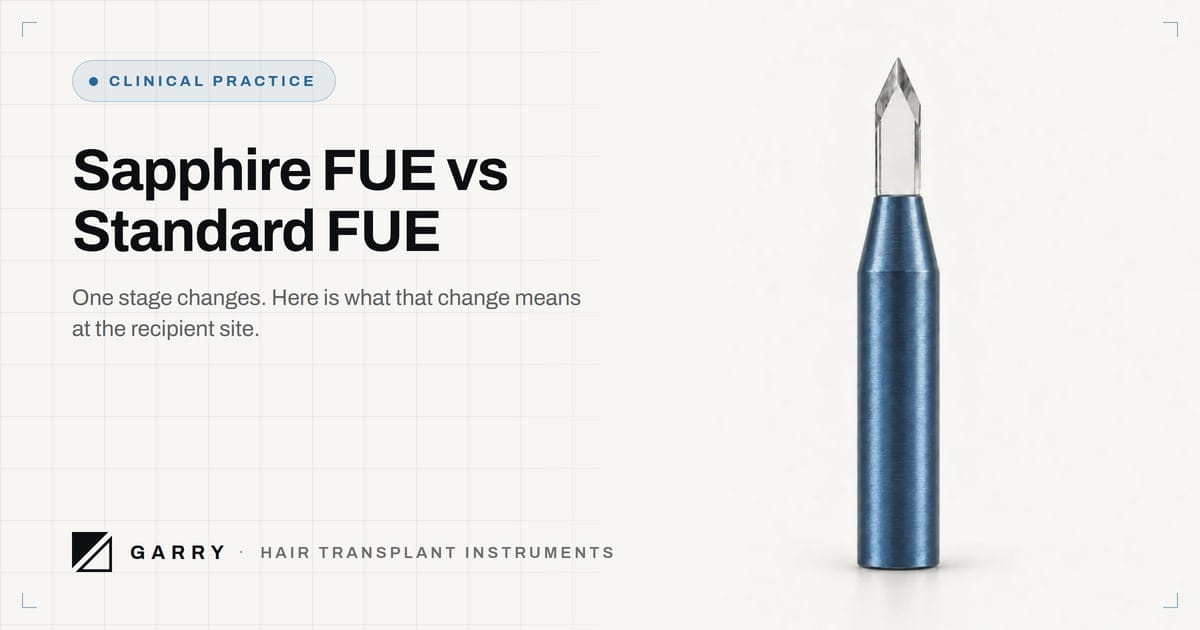
- Techniques offered. Classic FUE, sapphire channel opening, DHI, long hair FUE. Each adds an instrument family; our DHI vs FUE instrument comparison maps them.
- Session profile. Typical grafts per session and sessions per week drive quantities and spare capacity, not just unit choice.
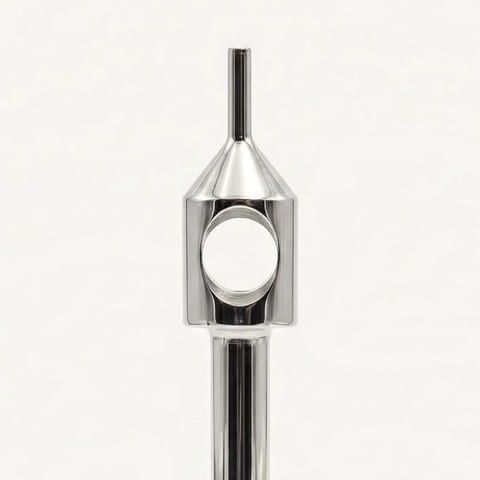
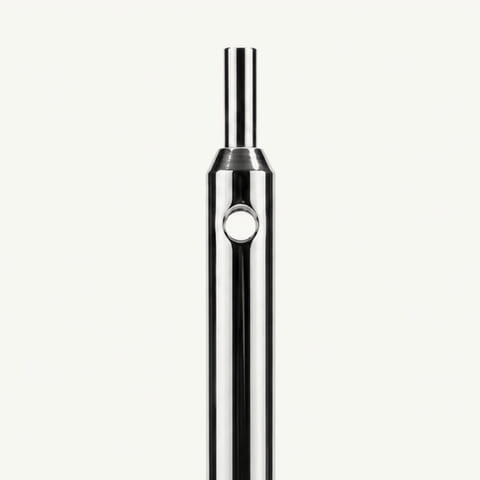
- Per-operator preferences. Punch geometry and diameter range per surgeon, blade widths per site maker, needle bores per placer. Sizes are the inventory; preferences are the spec.
- Reprocessing reality. Which sterilizer cycles you actually run, and whether instruments will live in containers designed for them. An inventory that does not match the sterilizer is a future complaint.
Step 2 - evaluate suppliers on verifiable facts
Marketing language is not a fact. The points below can be verified.
| Check | What to ask for |
|---|---|
| Identity | Who actually makes the instrument, and where. A manufacturer can answer process questions; a relabeler cannot. See how our instruments are made. |
| Inspection | Whether every unit is inspected before release, or only a sample of the batch |
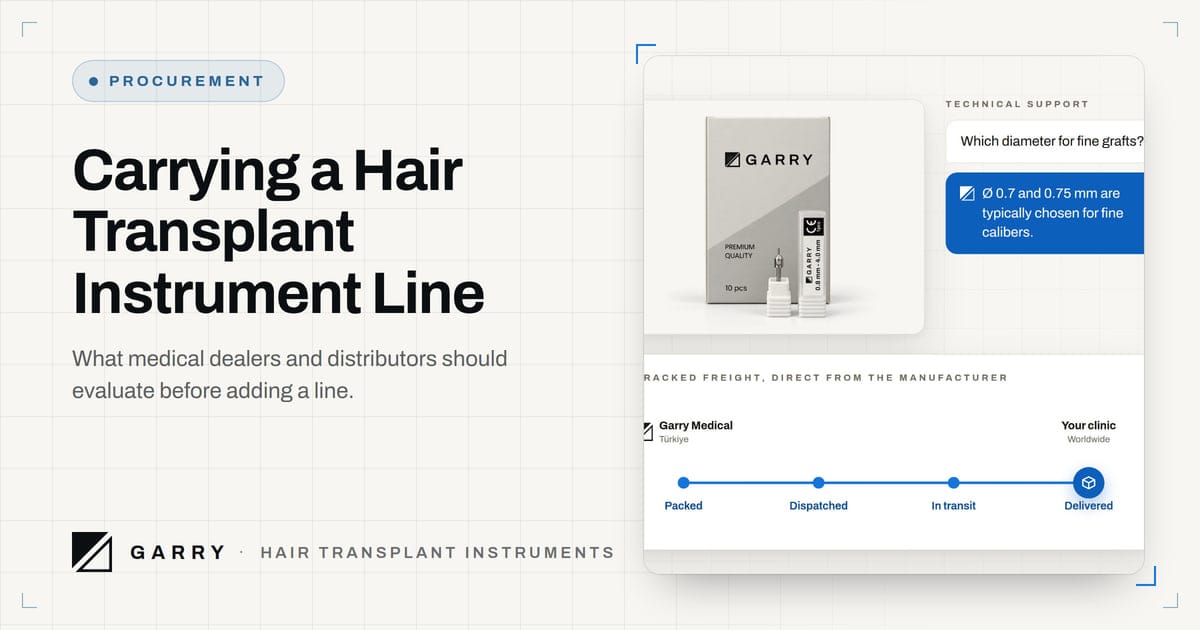
| Supply route | Whether you buy direct from the manufacturer, or through an importer in between |
| Sizing system | One order code per exact configuration, so reorders cannot drift |
| Support path | Who answers technical questions after delivery, and how fast |
Our earlier piece, 10 questions clinics should ask any instrument supplier, turns this into a working checklist you can send as is.
Step 3 - pilot before you standardize
Order the candidate configuration in a small quantity and put it through real sessions with the surgeons who will use it. A pilot answers the questions a datasheet cannot - how the edge behaves in your donor population, how the holder feels at hour four, whether the needle seat holds its setting. Small first orders can be priced through a quote request; a supplier that resists small first orders is telling you something.
Step 4 - receive like you mean it
On delivery, check identity (order codes against the order) and condition (packaging intact, edges undamaged). Two minutes per line when the goods arrive prevents an unanswerable warranty question months later. Because every size carries its own order code, that check is a straight comparison rather than a judgement call; our instrument care articles cover the habits between cases.
Step 5 - make reordering boring
Good procurement ends with reorders that carry no new decisions. The spec names order codes, the codes keep their meaning, and each shipment matches the specification behind those codes. That is why the Garry catalog gives every size its own code. When you are ready to price a full inventory against your spec, send it through a quote request; we reply within 24 hours on business days with a line-by-line configuration.