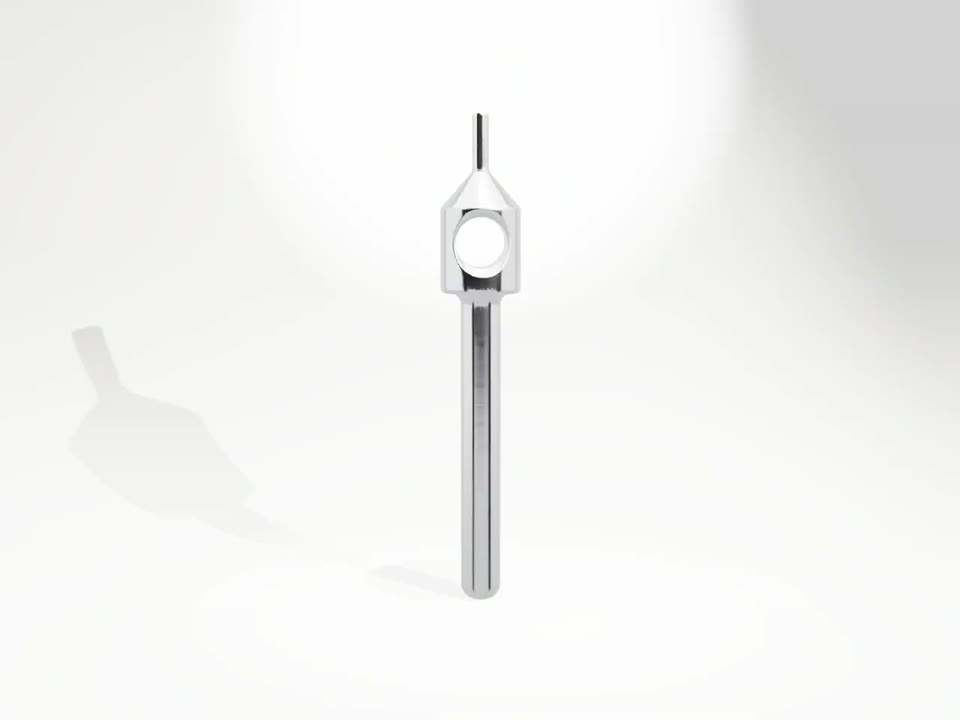
DHI vs FUE - What Changes on the Instrument Table
DHI is not a different extraction method. It is a different placement method, and the real change is which instruments sit on the table. A practical comparison for clinic teams planning either workflow.
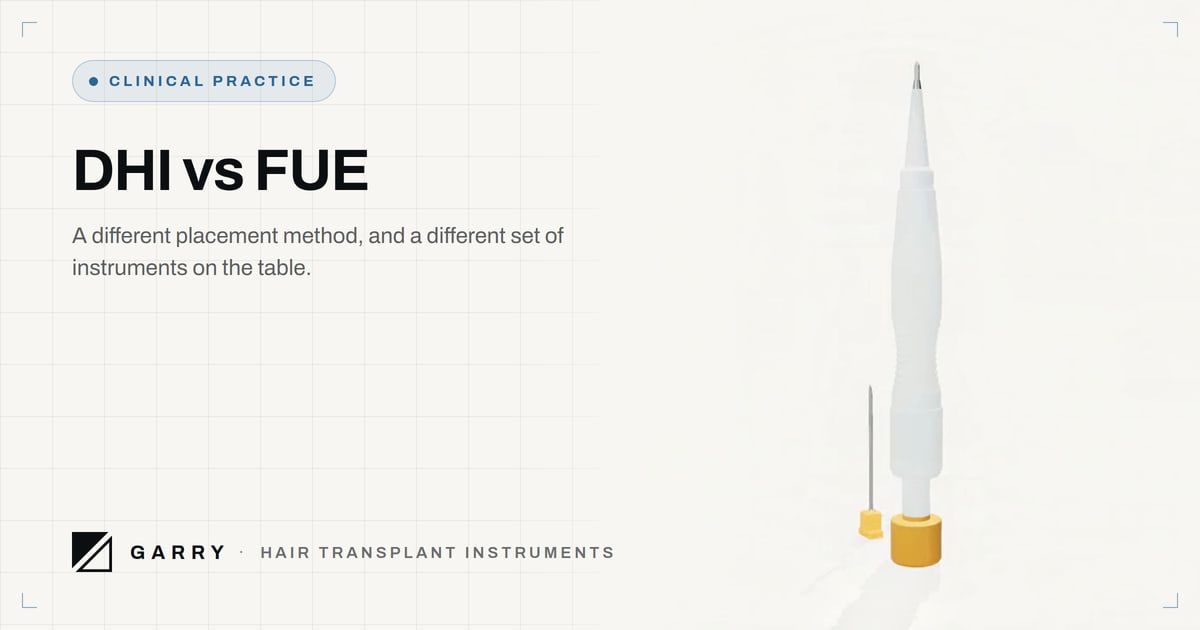
DHI and FUE are not competing extraction techniques. Extraction is FUE in both cases, performed with a punch. The difference begins after the grafts are out. Classic FUE workflows open recipient channels first (with steel or sapphire blades) and place grafts second, while DHI opens and places in one motion with an implanter pen. Choose between them and you are really choosing an instrument set and a division of labor, not a marketing name.
The two workflows, instrument by instrument
| Stage | Classic FUE (premade incisions) | DHI (direct implantation) |
|---|---|---|
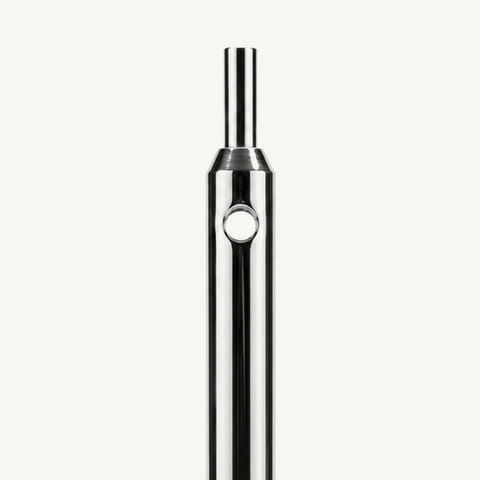
| Donor extraction | FUE punch | FUE punch (identical stage) |
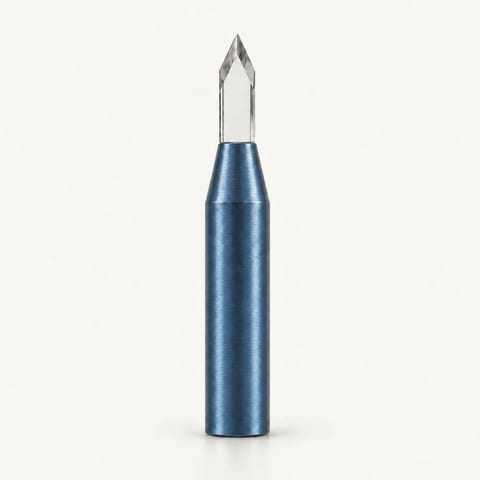
| Channel opening | Steel slit blade or sapphire blade in a holder | Opened by the implanter needle at placement |
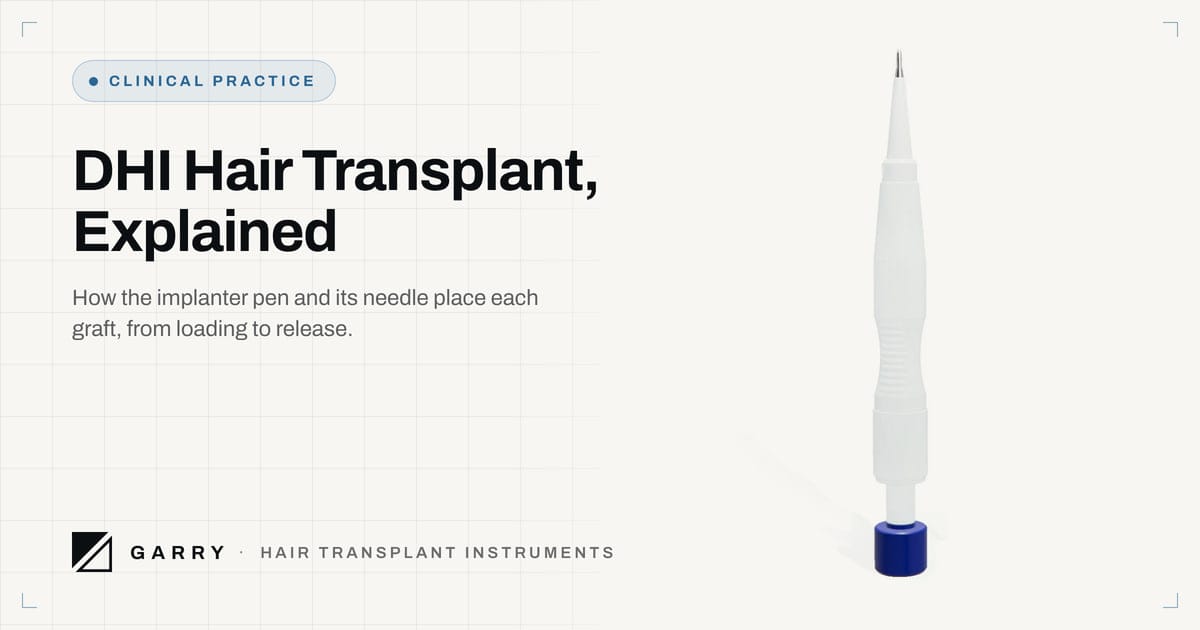
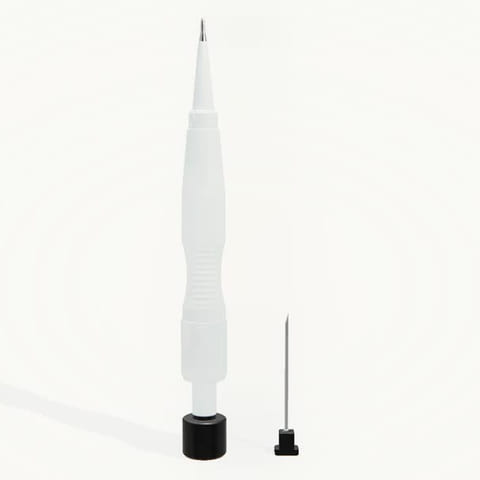
| Graft placement | Placement forceps into premade channels | Spring-loaded implanter pen, one motion |
| Consumables | Blades (steel or sapphire) | Implanter needles, sized to graft caliber |
| Key adjustment | Blade width and exposed depth in the holder | Exposed needle length and needle bore |
Everything upstream of the recipient area is shared. A clinic moving from classic FUE to DHI keeps its FUE punches and extraction discipline unchanged; what it adds is the implanter pen platform and a needle inventory, and what it removes is the blade and forceps stage.
What DHI asks of the instrument set
- A pen per operator, needles per case. Needles are the consumable. Bore must match graft caliber, which is why needle planning belongs next to punch diameter planning; the two sizes describe the same graft. Our guide to matching implanter needles to grafts covers the pairing logic.
- A repeatable needle seat. Implantation depth is set by the exposed needle length. A pen that holds its setting across needle changes keeps depth consistent through a session; one that drifts turns every needle change into a recalibration.
- Team training on loading. Grafts are loaded into the needle before placement. That step has no equivalent in the forceps workflow and dominates the learning curve.
What classic FUE asks instead
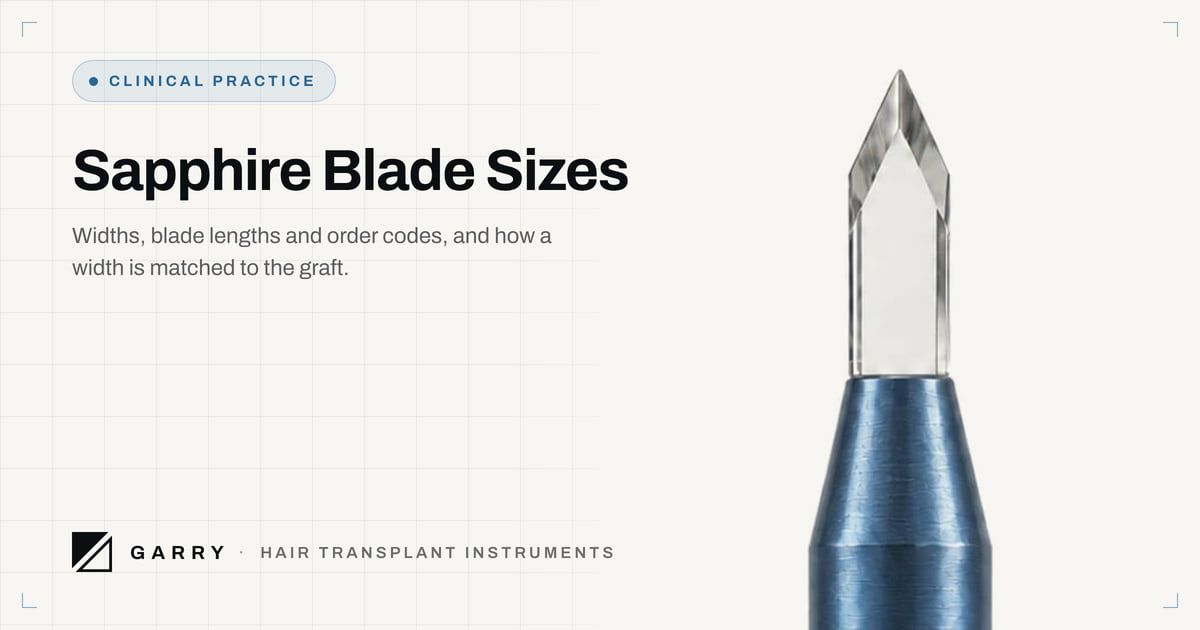
- Channel quality up front. Site making is its own stage, so blade choice matters - steel slit blades are the economical standard, while sapphire blades are chosen for edge consistency across long sessions. The trade-offs are covered in our sapphire vs steel comparison.
- Width and depth discipline. Blade width is matched to graft caliber and the holder controls exposed depth; the channel map is fully made before a single graft is placed.
- Two-handed placement. Forceps placement into premade channels splits the work naturally between team members, which many high-volume clinics consider its main operational advantage.
How teams actually choose
There is no single correct answer, and instrument suppliers who pretend otherwise are selling, not advising. These are the patterns we see across our clinic customers.
- Hairline and low-graft-count cases often go to DHI for one-motion control of angle and depth at the moment of placement.
- High-volume sessions often stay with premade incisions because the stages can run in parallel across a team.
- Mixed protocols are common, with sapphire channels for the bulk of the plan and pen placement in zones where the surgeon wants direct control. The instrument sets coexist without conflict.
Planning the purchase
Whichever side you land on, the punch inventory decision comes first because extraction is shared. From there, adopting DHI means a pen plus a range of needle bores; a classic FUE upgrade is usually a blade family, with holder fit confirmed against the clinic's own holders. If you are costing both paths for a tender or a new clinic, request a quote with your expected session profile and we will configure both variants with one order code list per line.