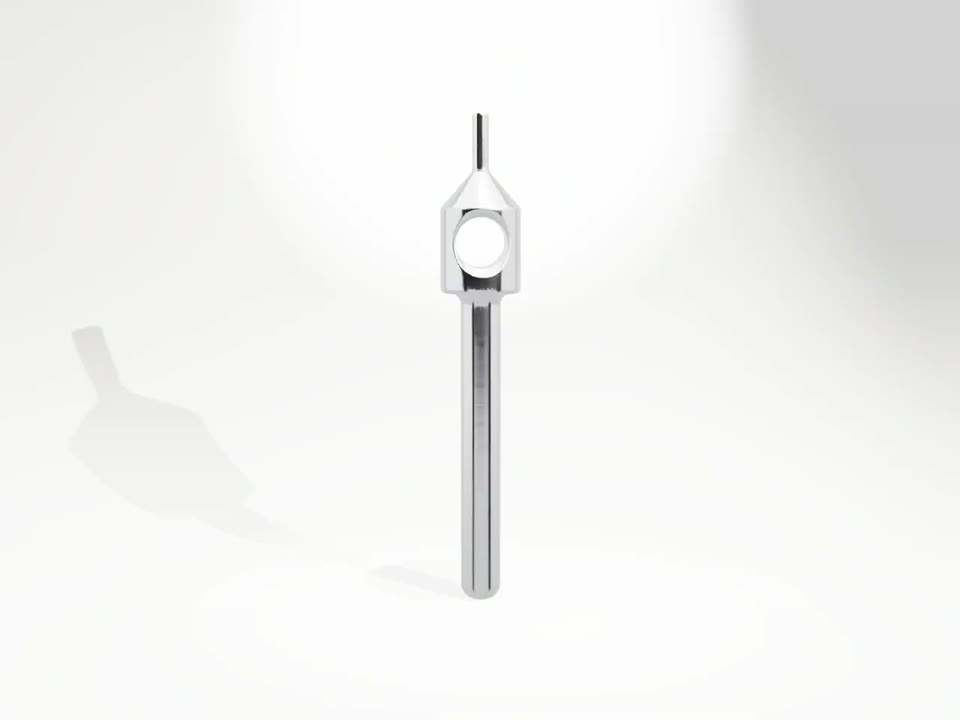
Sapphire vs Steel Blades in Hair Transplantation
Sapphire or steel for recipient-site incisions? An honest comparison of crystal hardness, edge consistency, cost per case, handling and how to trial both.
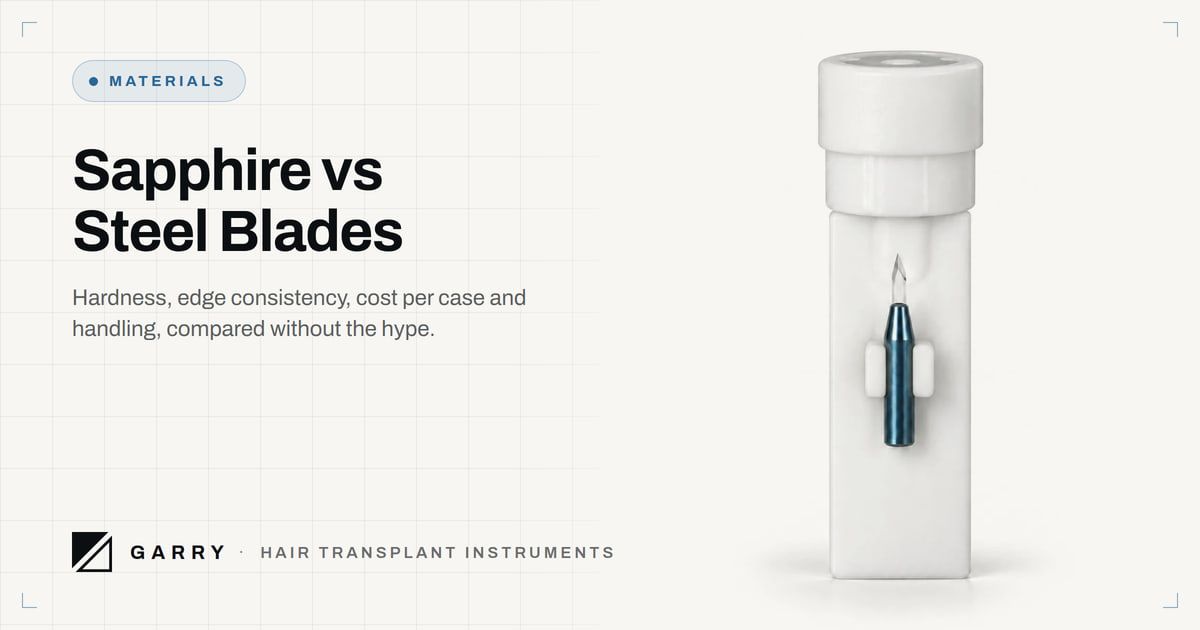
Choosing between sapphire and steel blades is one of the most common questions we field from clinics setting up or refining a follicular unit extraction (FUE) or DHI workflow. Both create the recipient-site incisions that grafts are placed into, and in some slit-based protocols both are used at the donor stage as well. In practice, neither is universally "better" - they are different tools with different economics, handling requirements and edge behaviour. This guide explains what each one is, how the material properties translate into behaviour at the tip, and how to decide which belongs in your kit.
What each blade actually is
Steel slit blades
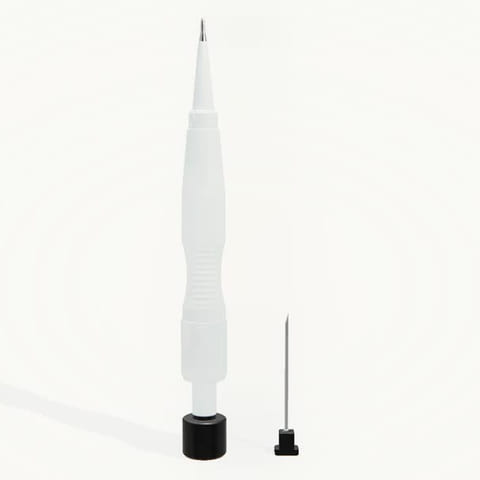
A steel slit blade is made from hardened martensitic stainless steel, ground and honed to a cutting edge, then mounted in a blade holder. Many clinics use a cut-to-width system, trimming a larger blade to the exact channel width a given case calls for. Steel is the long-standing economical standard in recipient-site creation - it is widely available, robust, forgiving of everyday handling, and typically single-use per patient.
Sapphire blades
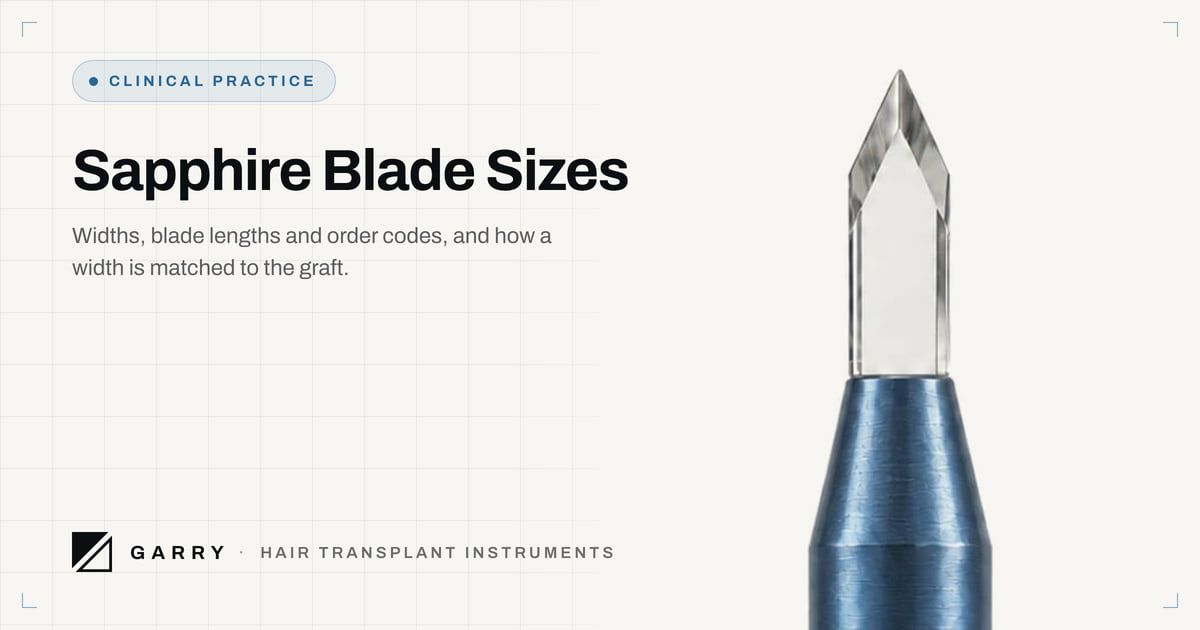
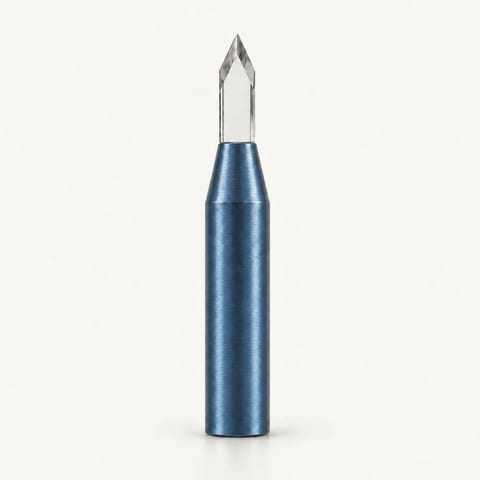
A sapphire blade carries a sapphire crystal tip, ground and shaped into slit or spear geometries. Sapphire sits at roughly 9 on the Mohs hardness scale, second only to diamond at 10. That hardness is the whole point - it lets the edge be ground very fine and hold that geometry. The trade-off is brittleness - sapphire is hard but not tough, so it can chip if dropped, pried sideways, or knocked against a metal tray.
Crystal properties and what they mean at the tip
Material science, not marketing, explains the difference in feel.
- Hardness (~Mohs 9). A harder material can take and keep a finer edge. Sapphire is designed to present a consistent, smooth cutting geometry through a long working session.
- Smooth crystalline surface. The polished crystal face is designed to pass through tissue with low drag, which many surgeons describe as a "clean" entry.
- Brittleness. The same rigidity that holds the edge means the blade tolerates neither lateral prying nor shock loading. Sapphire needs gentle handling and protected storage.
- Chemical inertness and non-magnetism. Sapphire is inert and non-magnetic, which some clinics value in specific setups.
None of this is a promise about outcomes. It is a description of design intent and known material behaviour - the surgeon's technique still governs the result.
Steel - economics and robustness
We will say this plainly, because manufacturers rarely do. For a large number of practices, steel is entirely sufficient and sometimes the smarter choice. Steel slit blades are inexpensive per case, tolerant of variable staff handling, and available in flexible custom widths when you use a cut-to-width holder. A high-volume clinic running strict single-use protocols may find that steel's cost profile and robustness matter more than any edge-consistency argument. Sapphire is not automatically an upgrade - it is a different set of trade-offs.
Incision-wall character
Surgeons often choose based on the character of the channel wall. Sapphire's hard, smooth, finely ground edge is designed to create clean-walled incisions with consistent width, which is one reason it is associated with dense-packing protocols where many closely spaced sites are made in sequence. Steel edge quality is perfectly good but depends more on grind quality and on the blade being fresh. We deliberately avoid attaching numbers to this - incision-wall quality is influenced by blade, angle, depth, hydration and operator, and any single-figure claim would be misleading.
When clinics choose each - an honest comparison
| Consideration | Steel slit blade | Sapphire blade |
|---|---|---|
| Cost per case | Lower | Higher |
| Custom / variable widths | Excellent (cut-to-width) | Fixed per blade geometry |
| Edge consistency across a long session | Good when fresh | Designed for consistency |
| Dense-packing preference | Works well | Frequently preferred |
| Handling robustness | High | Requires careful handling |
| Reuse model | Typically single-use | Per manufacturer instructions |
Choose steel when budget-per-case is a priority, you need variable custom channel widths, you run high-volume single-use protocols, or staff handling varies shift to shift.
Choose sapphire when edge consistency across very long or dense sessions is a priority, your surgeons prefer the entry feel, and your team can commit to careful handling and storage.
Many mature clinics simply stock both and let the surgeon decide per case. That is a legitimate and common answer.
Sterilization and handling differences
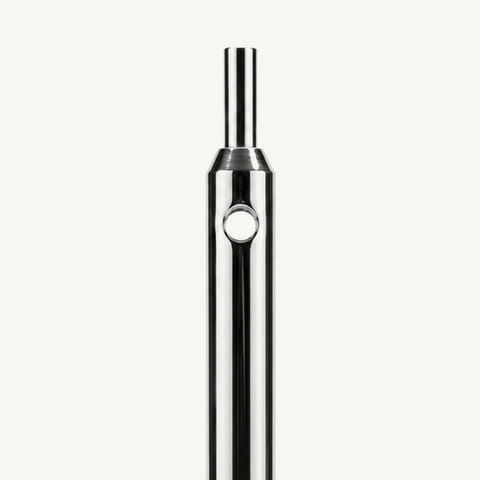
Both blade types are compatible with standard steam sterilization; most protocols run a moist-heat autoclave cycle at 134 °C. The practical difference is mechanical - sapphire must be protected from edge contact and mechanical shock, so dedicated trays or slotted holders and careful transport matter more than they do with steel. Whichever edge you run, the blade holder is not an afterthought - holder ergonomics, locking security and balance directly affect control and, with sapphire, the risk of an accidental chip. If your recipient-site work sits alongside extraction, your FUE punches and your slit strategy should be considered together as one system rather than as separate purchases.
How to trial both without guessing
- Order small evaluation quantities of each rather than committing to a bulk order.
- Run them in parallel on comparable sessions so surgeon feedback is like-for-like.
- Standardise the holder so you are comparing edges, not ergonomics.
- Collect structured feedback on entry feel, wall character, and handling - not just a gut impression.
GARRY manufactures sapphire blades in Türkiye. Every instrument is individually inspected before it ships, with no sampling plans, and every width carries its own order code, so the set your surgeons liked in the trial is the set you reorder. Evaluation quantities are available on quotation.
FAQ
Is sapphire better than steel in every case? No. Steel is a legitimate, economical standard. Sapphire offers edge consistency and handling characteristics some surgeons prefer, at a higher cost per case and with stricter handling requirements.
Can sapphire blades be reused? Follow the manufacturer's instructions for use. Reuse limits, if any, are defined there, not by a general rule of thumb.
Do sapphire blades need a special holder? They need a secure, well-matched holder to protect the brittle edge and give the surgeon control. Do not improvise with a loose or ill-fitting holder.
Which is more cost-effective? Per case, steel is typically lower cost. Whether sapphire "pays back" depends on your session length, packing density and surgeon preference - trial it before deciding.
Not sure which edge fits your protocol? Request a quote and tell us your session profile - we will reply within 24 hours on business days and can include an evaluation quantity of sapphire widths so your surgeons decide on real tissue, not a spec sheet.