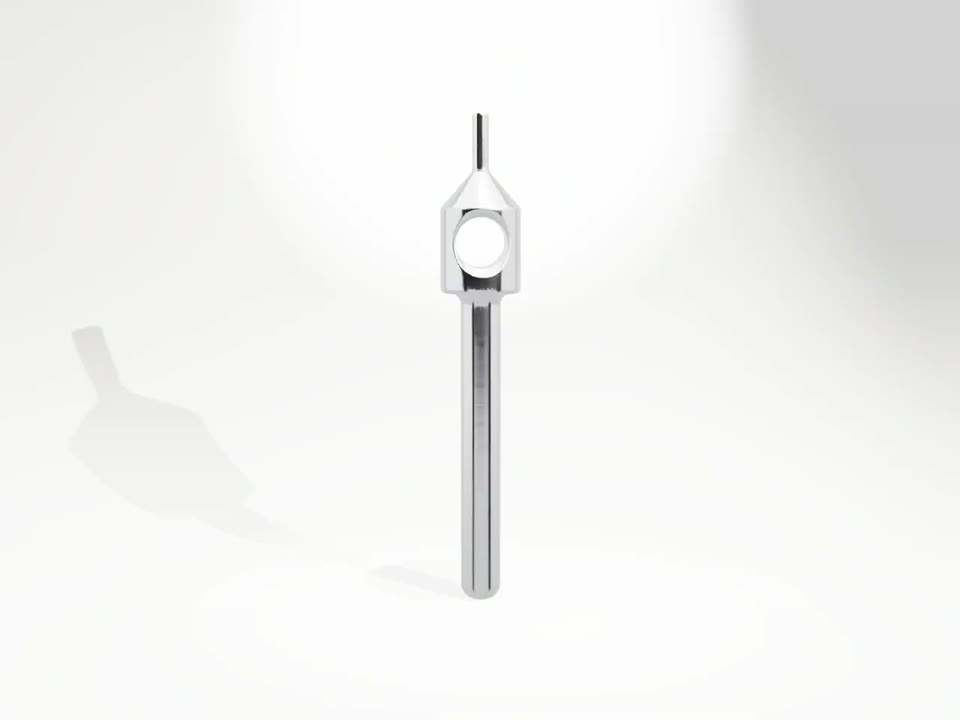
Passivation, Explained - The Invisible Layer That Decides Instrument Lifespan
The corrosion resistance of a surgical instrument lives in a chromium-oxide layer a few nanometers thick. Passivation builds it; reprocessing chemistry preserves or destroys it.
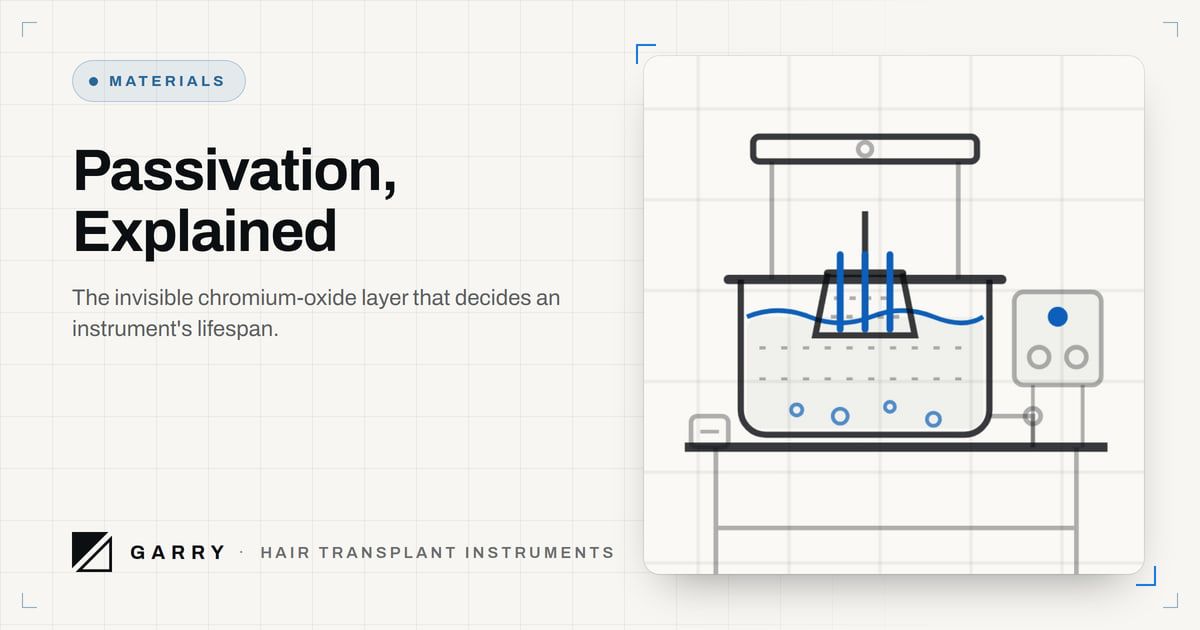
Polish a stainless instrument to a mirror and you still have not made it corrosion resistant. That property lives in the passive layer - a chromium-oxide film a few nanometers thick that forms on the surface and regenerates when oxygen is available. Passivation is the controlled process that strengthens this layer before an instrument ever sees an OR.
What passivation actually does
Machining, grinding and polishing leave free iron particles and sulfide inclusions embedded in the surface. Each one is a potential rust spot. Passivation - typically a controlled bath in nitric or citric acid per ASTM A967 - dissolves this free iron and leaves the surface chromium-enriched, so the oxide film that forms is continuous and stable.
Well-made instruments are passivated after final polishing and again after any marking step, because marking locally disturbs the surface.
How the layer gets destroyed in service
The passive layer regenerates, but only if it is not being attacked faster than it can rebuild.
- Chlorides are the primary enemy - saline left on instruments, chlorine-based disinfectants, some tap waters. Pitting starts in hours, not weeks.
- Trapped moisture in box locks and under residue keeps oxygen away from the very spot that needs to re-passivate.
- Steel wool and abrasive pads strip the layer and embed carbon-steel particles that rust in the next cycle.
- Contact corrosion - one rusting low-grade instrument in a tray seeds corrosion onto its neighbors.
Simple rules that preserve it
- Rinse blood and saline off at the point of use, before they dry.
- Final-rinse with demineralized water, then dry completely.
- Retire or refurbish any instrument showing active corrosion; do not let it share a tray.
- Use neutral-pH detergents unless the IFU says otherwise.
Brown staining is not necessarily rust. Test a stain with an eraser. If it lifts, it is a deposit (usually water quality or detergent residue); if the metal underneath is pitted, it is corrosion. The distinction decides whether you fix your water or your instrument.
A properly passivated instrument, reprocessed with compatible chemistry, can outlast the career of the surgeon who first used it.